

Julian Kindred, Client Director
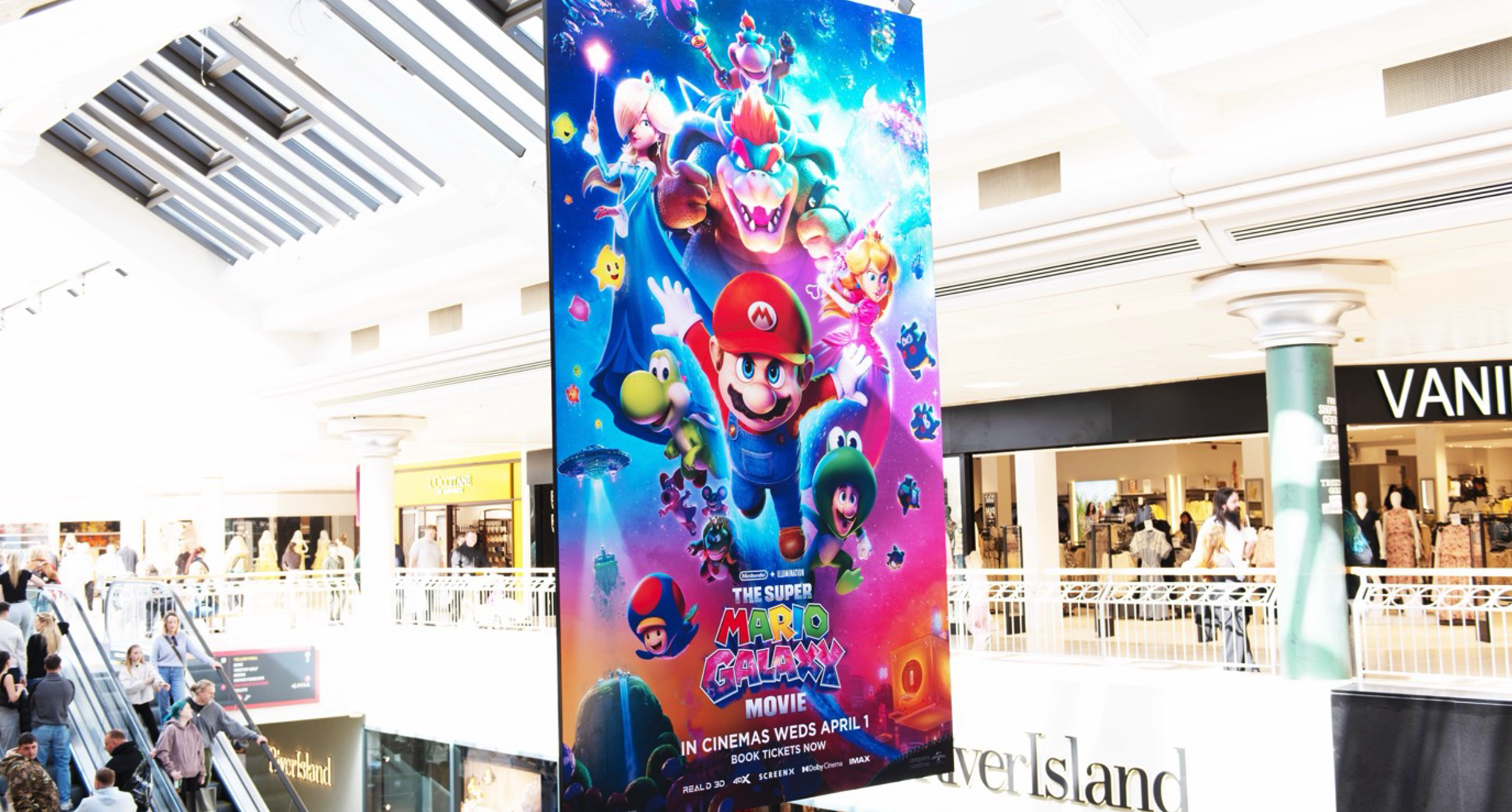
With forecasts pointing to 2026 as a landmark year for cinema, the theatrical market is entering a period of renewed opportunity. A packed release schedule and growing consumer enthusiasm for big-screen experiences are set to drive audiences back to cinemas in large numbers. As distributors compete for attention, reaching audiences who drive attendance, influence group viewing decisions and generate word of mouth has never been more important. Among the most valuable of these audiences are mallgoers, whose cinema-going habits and social influence make them a powerful force for theatrical success.
For film marketers seeking audiences that do more than simply buy a ticket, mallgoers represent a uniquely valuable segment. Our latest research, The Cinema Effect, reveals that people who visit shopping malls are not only heavier cinemagoers than the general population, but they are also more influential, more social and more likely to drive group attendance and early box office performance.

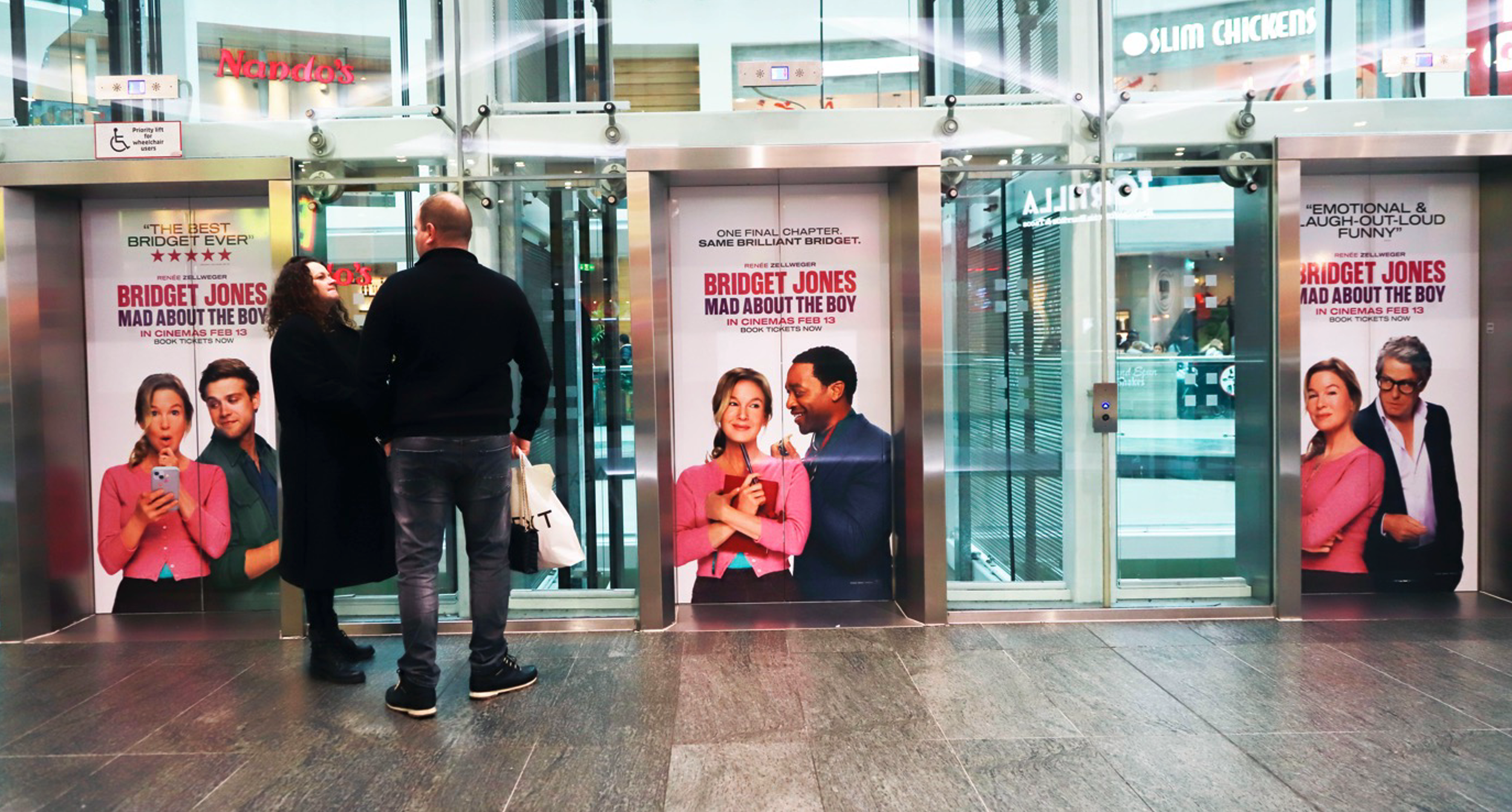
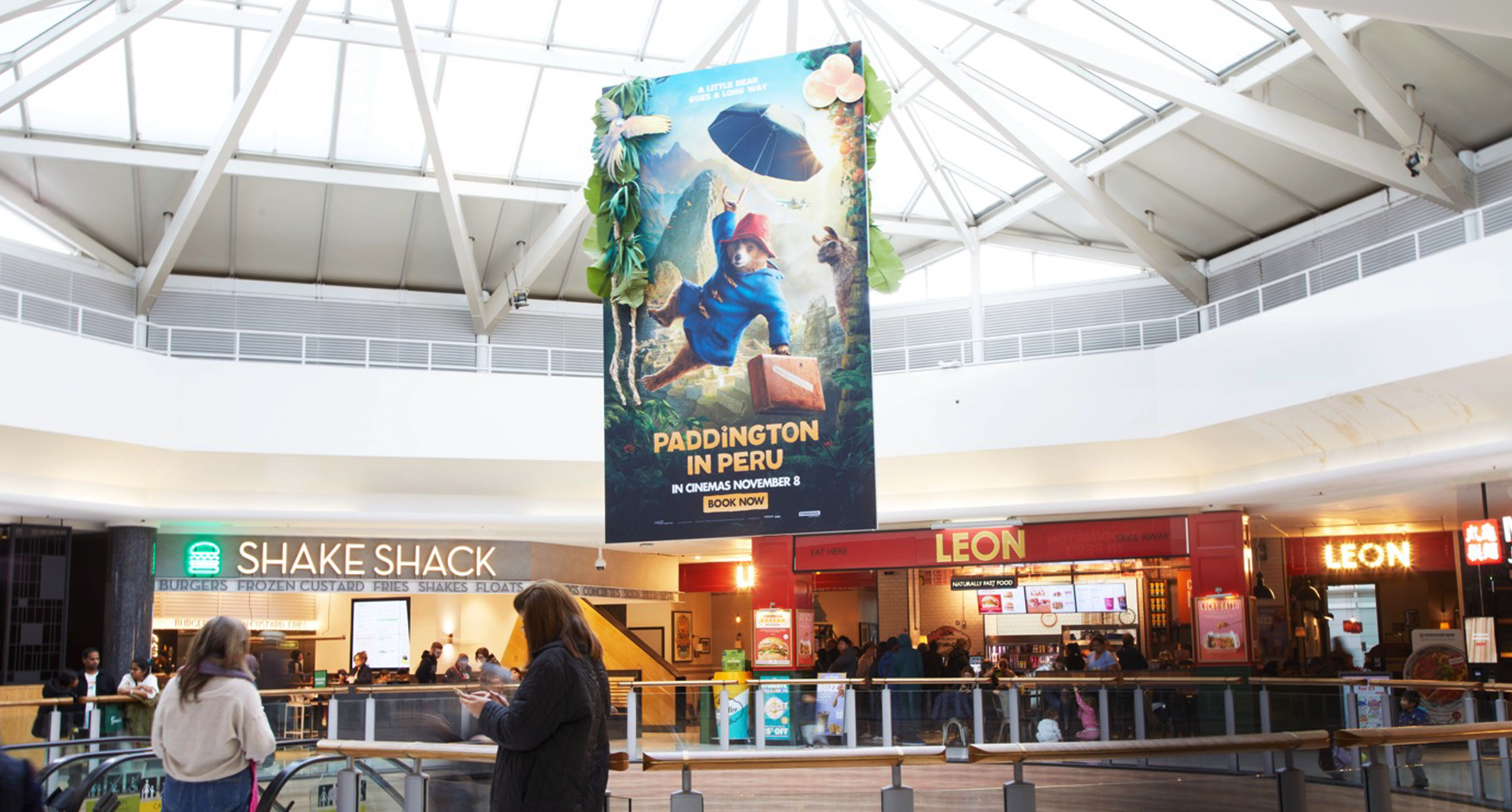
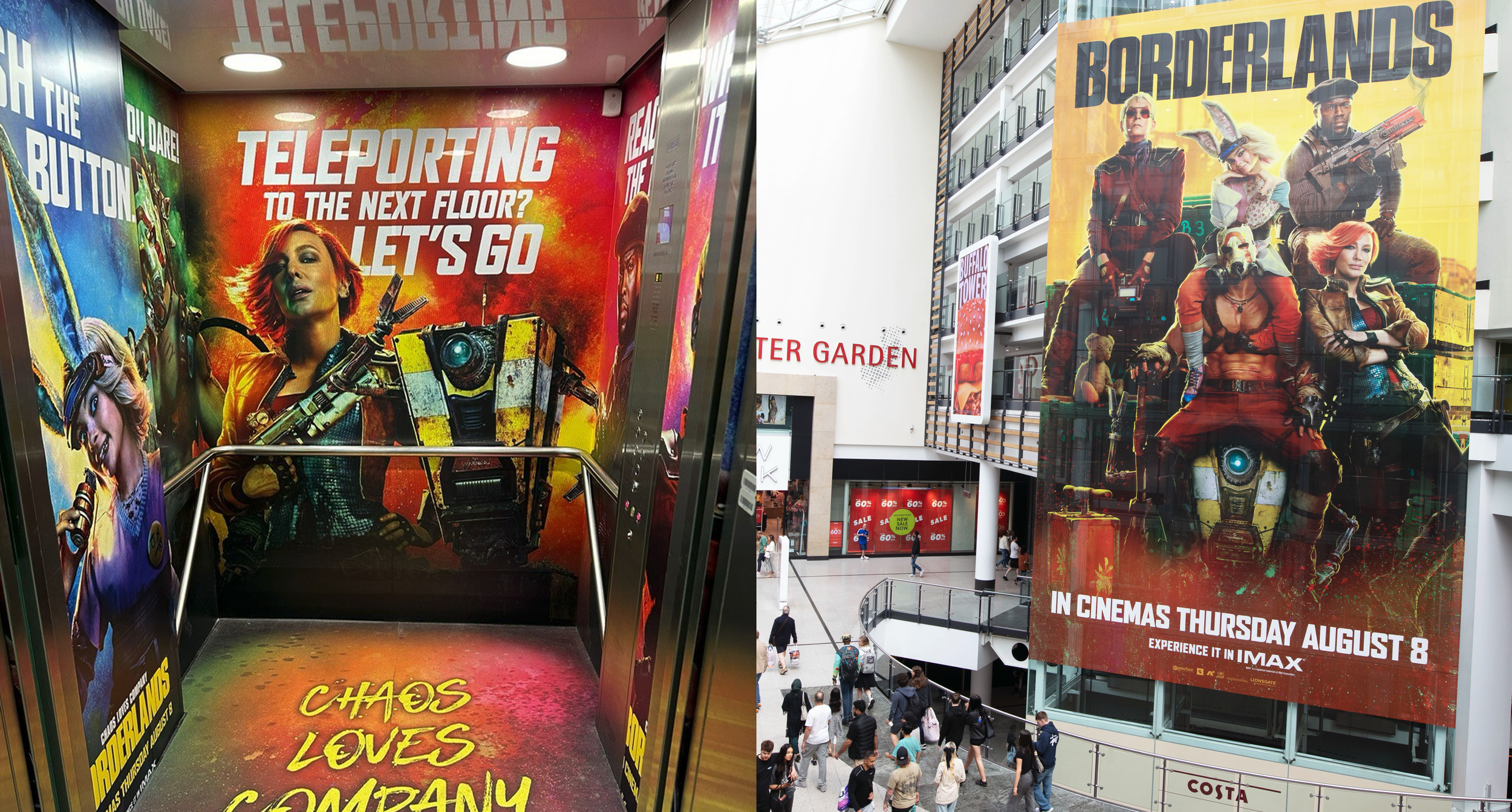
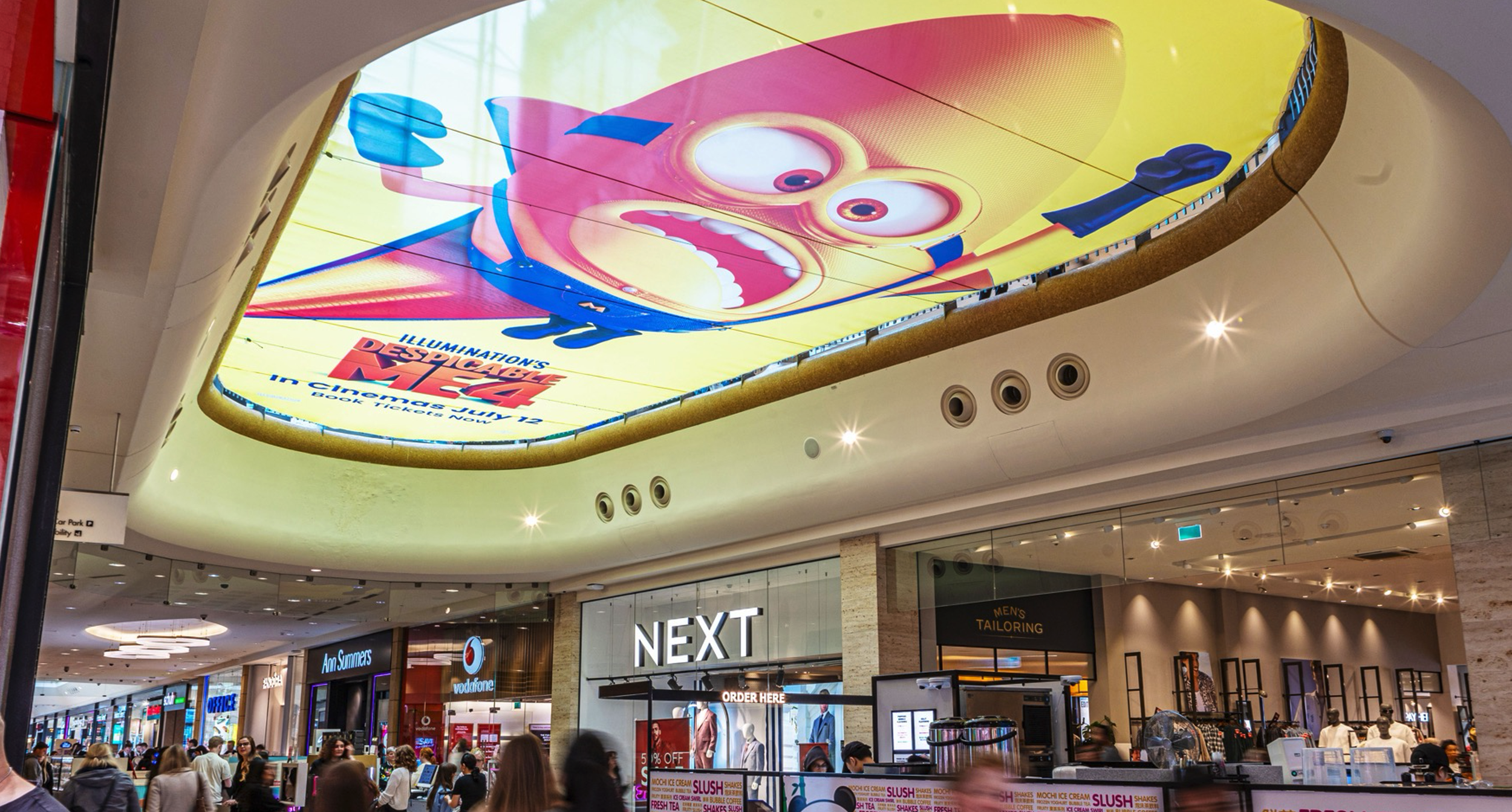
Mallgoers drive the box office
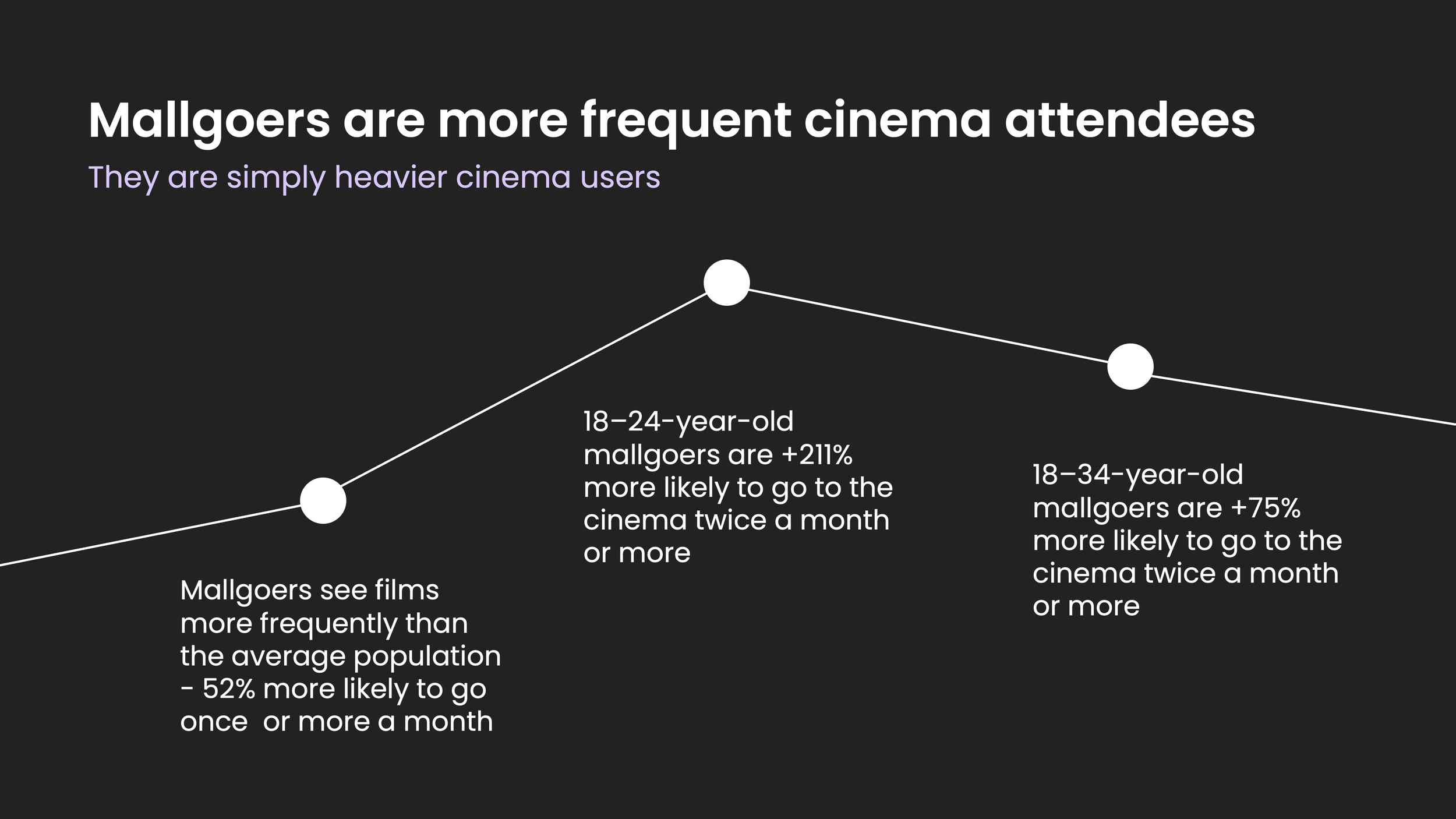
The relationship begins with cinema frequency. Mallgoers attend the cinema significantly more often than the average consumer, making them 52% more likely to visit at least once a month. This effect becomes even more pronounced among younger audiences. Mallgoers aged 18–24 are more than three times as likely to visit the cinema twice a month or more, while those aged 18–34 are 75% more likely to do so. Simply put, mallgoers are among the industry's most active cinemagoers.
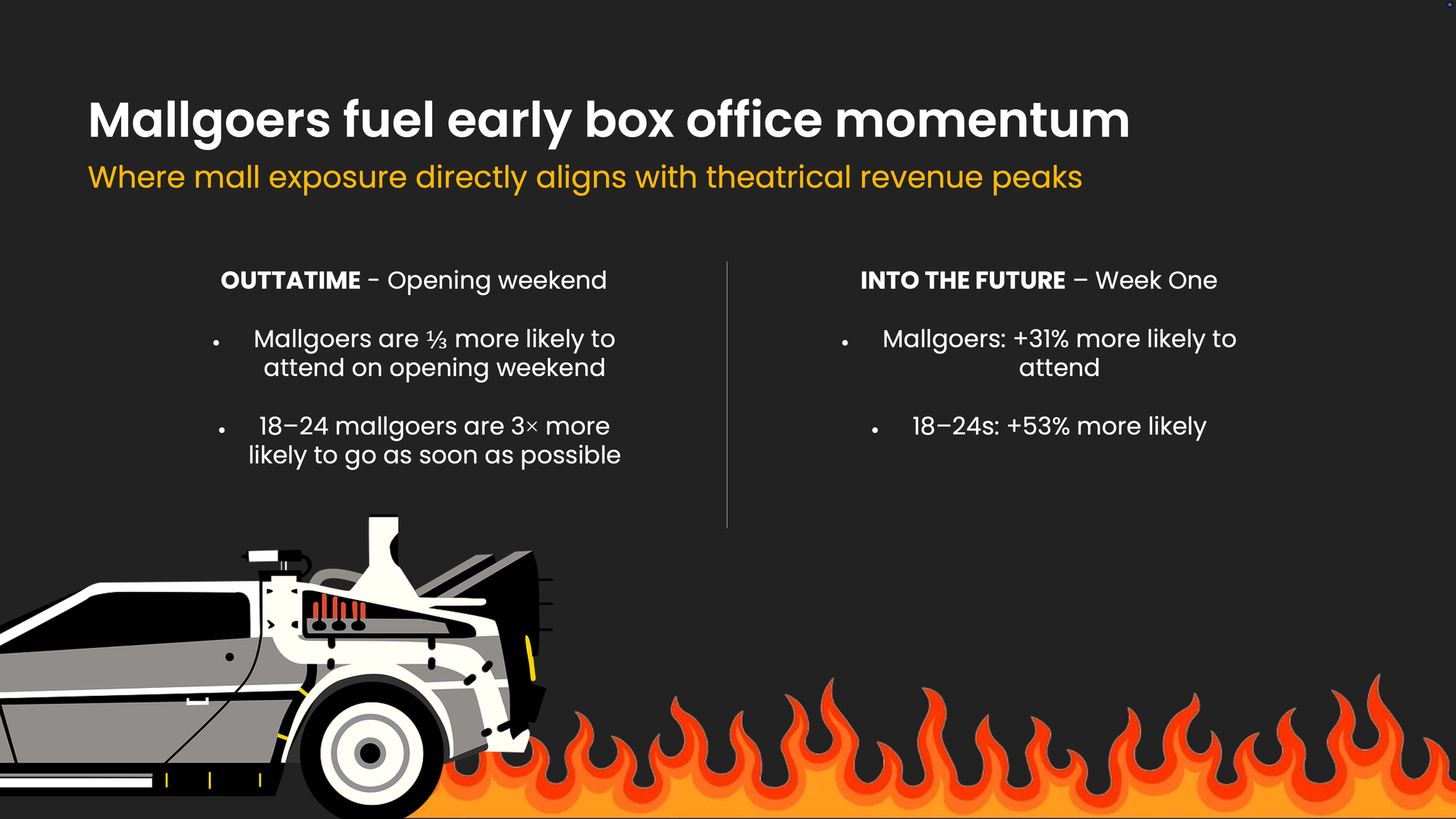
Their value extends beyond attendance frequency. Mallgoers play a critical role in generating momentum during the most important stages of a film's theatrical release. They are one-third more likely than average to attend on opening weekend and 31% more likely to see a film during its first week in cinemas. Among 18–24-year-olds, this behaviour is even stronger, with young mallgoers three times more likely to see a film as soon as possible and 53% more likely to attend during the opening week. This alignment between mall audiences and peak theatrical revenue periods makes malls a particularly powerful environment for film marketing campaigns.
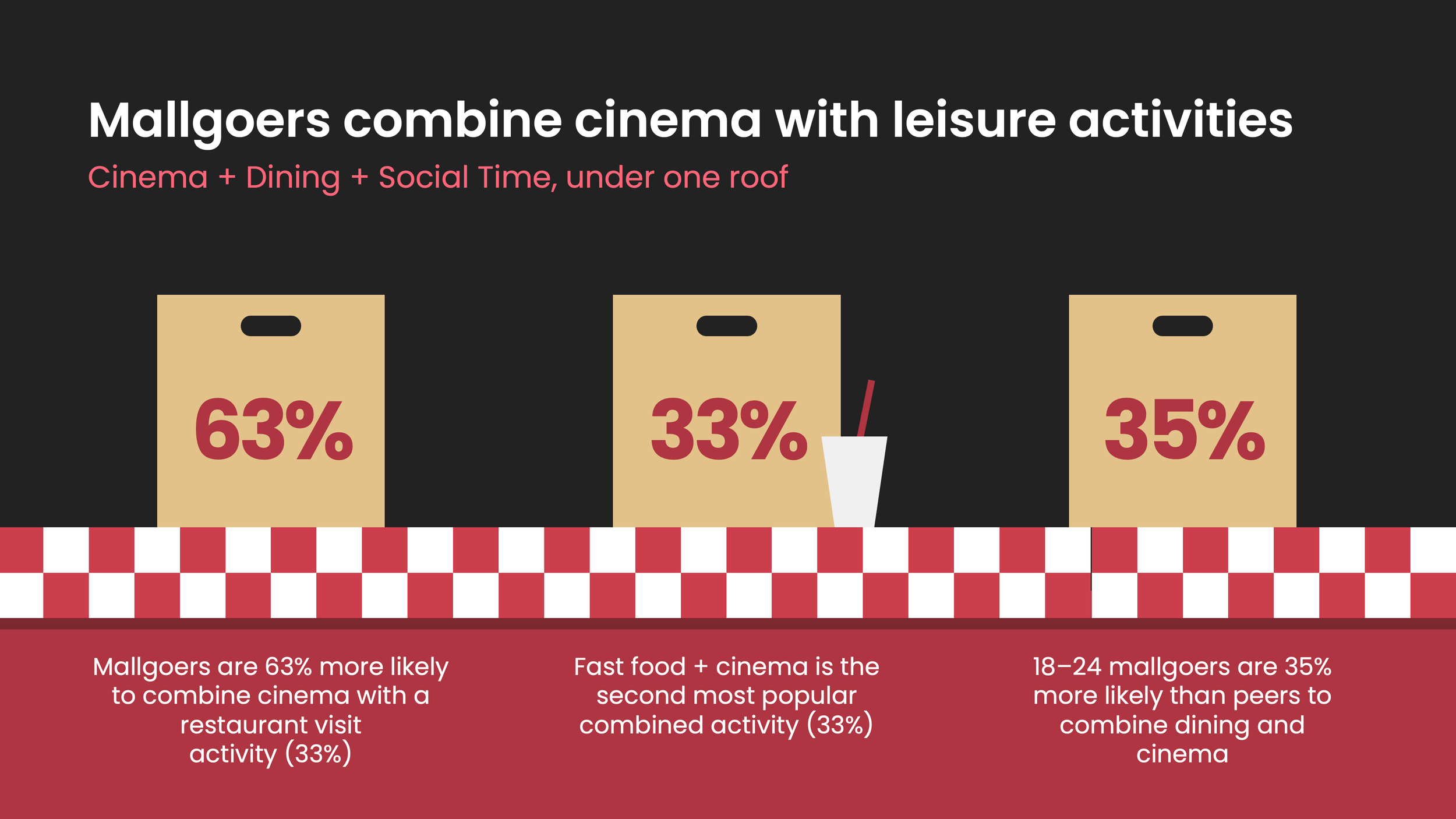
Cinema visits are rarely standalone activities for mallgoers. Instead, cinema forms part of a broader leisure experience. Mallgoers are 63% more likely to combine a trip to the cinema with a restaurant visit, while fast food ranks as the second most popular accompanying activity. Among 18–24-year-olds, the likelihood of combining dining and cinema rises by a further 35% compared with their peers. The mall environment naturally creates opportunities for entertainment, dining and socialising to happen under one roof, reinforcing cinema as part of a complete day out.
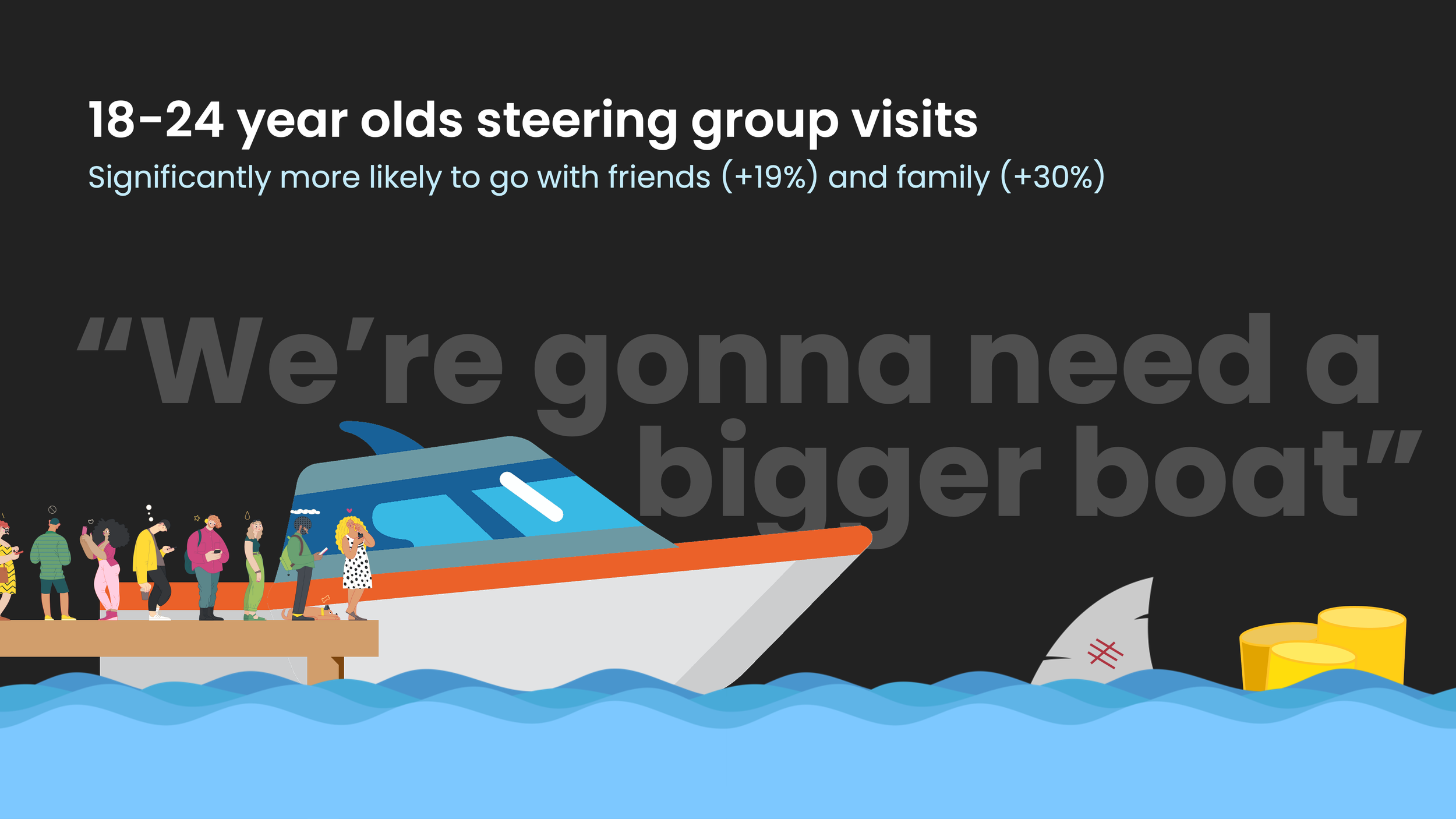
This social dynamic also translates directly into ticket sales. Most mallgoers attend the cinema with others, with 51% going alongside family members, 46% with partners and 30% with friends. Younger audiences are particularly influential in driving group attendance, with 18–24-year-olds significantly more likely to organise visits with both friends and family. Every cinema decision therefore has the potential to generate multiple ticket purchases rather than a single admission.
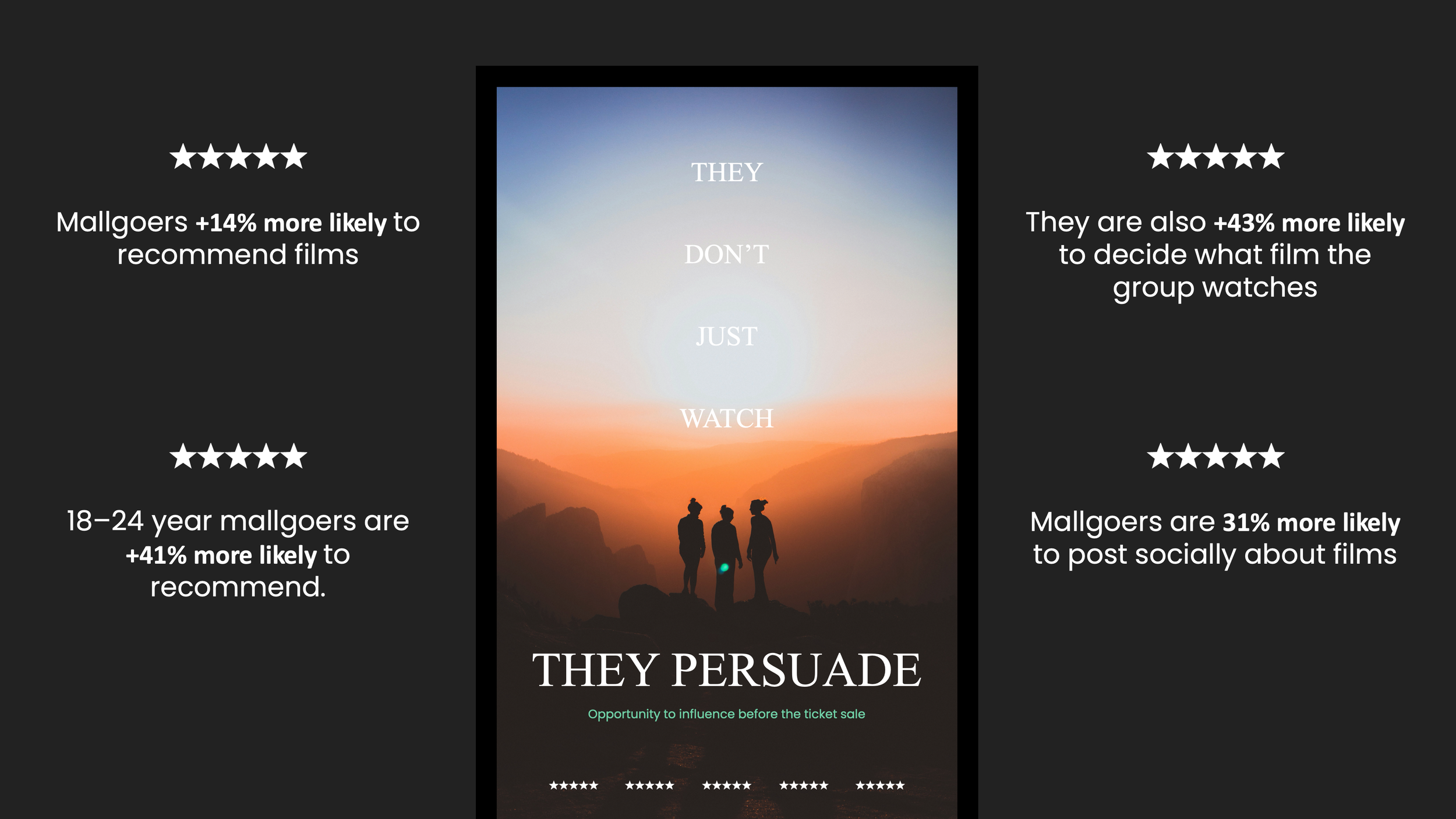
Perhaps even more importantly, mallgoers continue to influence others after they leave the shopping centre. Nearly three-quarters discuss products they have seen advertised in malls with friends and family, creating a powerful bridge between physical exposure and word-of-mouth advocacy. When it comes to films, they are 14% more likely than average to recommend what they have watched, while younger mallgoers are 41% more likely to do so. They are also 43% more likely to decide which film a group ultimately chooses to see and 31% more likely to post about films on social media. In other words, mallgoers do not simply consume content-they actively shape the viewing decisions of those around them.

What cuts through?
The strength of mall audiences is evident among families.
Parents consistently view cinema as a valuable family treat and malls naturally support the planning and coordination of group outings. Households with children under five are 31% more likely to visit the cinema at least once every fortnight, while those with children aged six to twelve are 33% more likely. Among families with teenagers aged 13–17, the figure rises to 41%. Mall environments therefore over-index across every family life stage, helping to drive repeat attendance and sustained cinema engagement.
Genre preferences among mallgoers demonstrate broad appeal across the theatrical landscape
Nearly two-thirds watch comedy and action films, while thrillers, dramas and family films all attract substantial audiences. Younger audiences show particularly strong engagement with horror and action, while adults aged 18–34 are significantly more likely to enjoy romance titles. This diversity highlights the versatility of mall media, supporting both blockbuster franchises and genre-led releases.
To engage these audiences effectively, advertisers must also understand which formats command attention within mall environments.
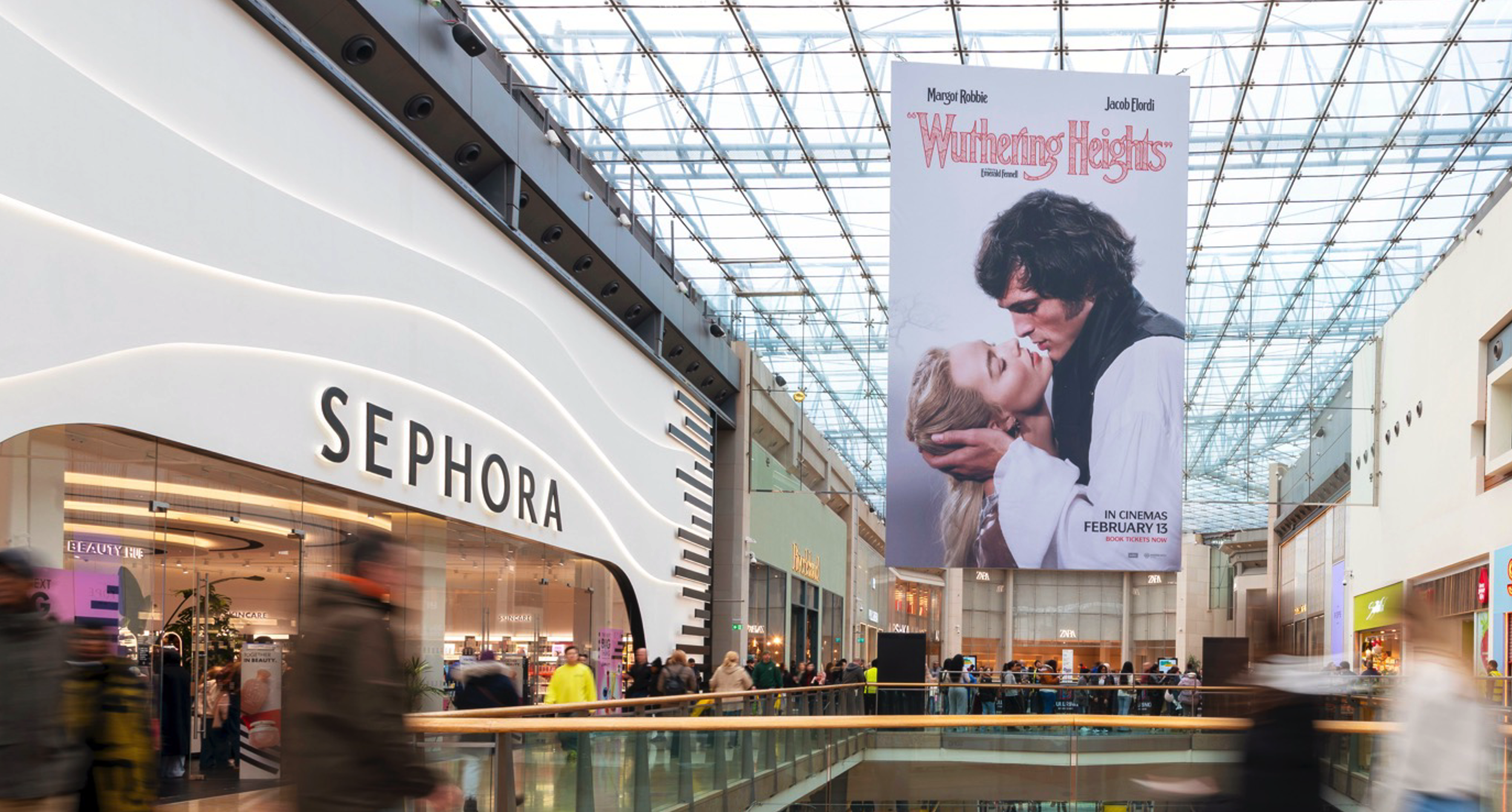
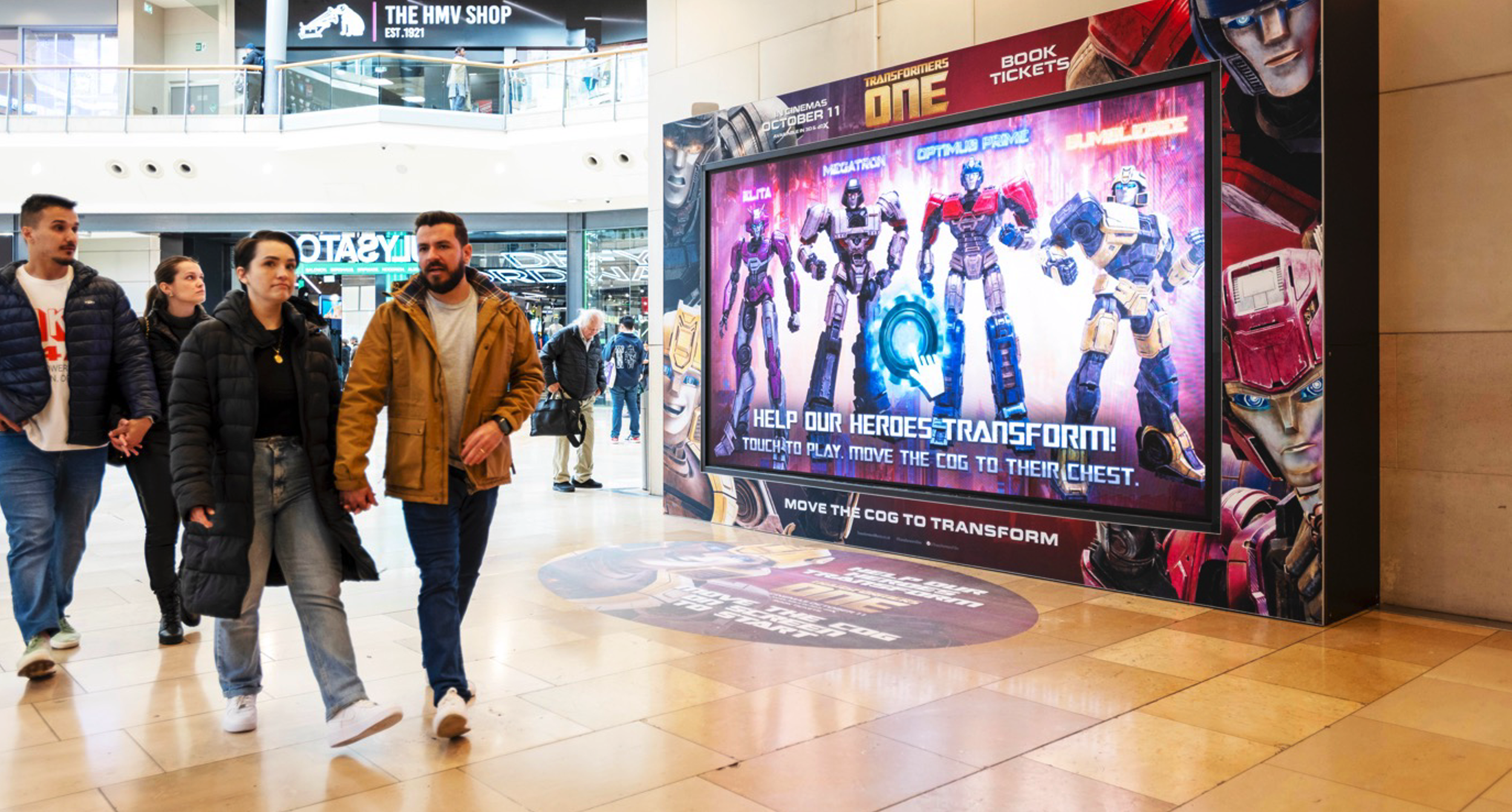
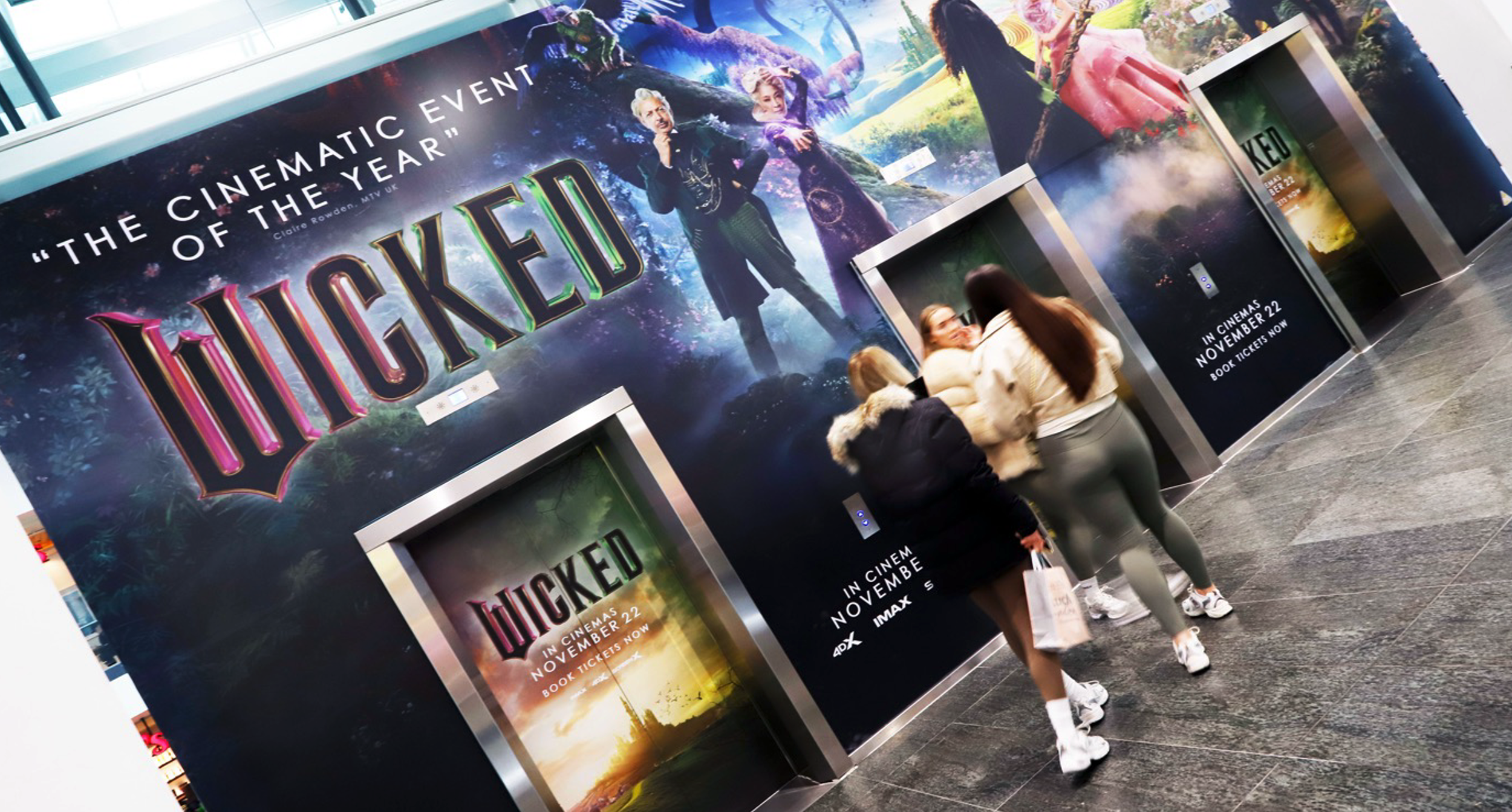
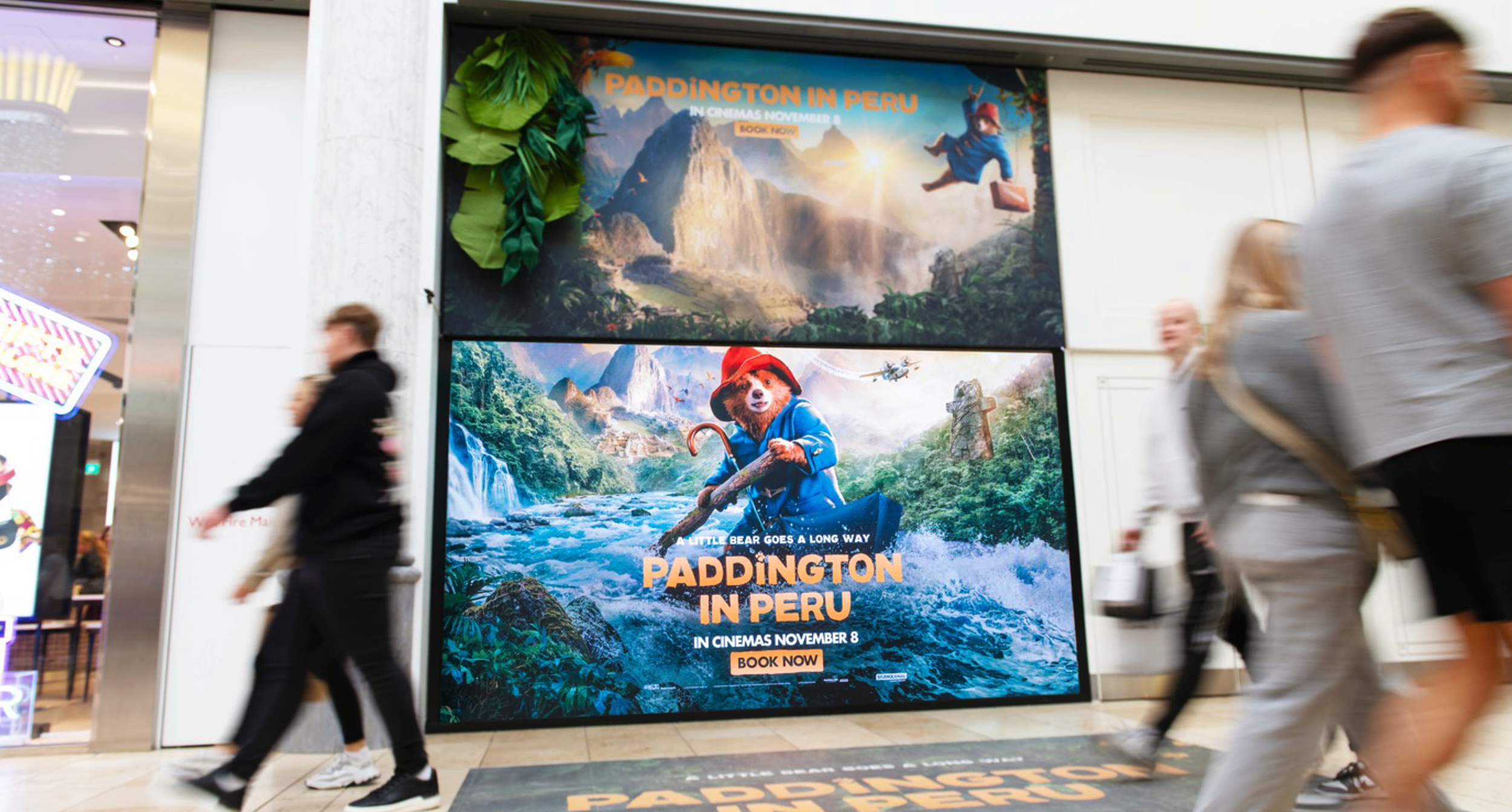
High-impact audiovisual media stands out as the most noticed advertising platform, with large-format screens attracting the highest levels of awareness, followed by audio and landscape screens. Full-length trailers are the most noticed film advertising format, closely followed by teaser content. Timing is equally important, particularly among younger audiences, who are 35% more likely to notice film advertising immediately before release.
Previous in-situ eye-tracking research reinforces the importance of premium audiovisual formats. Our Large format digital Orbit screens generated 58% more visual fixations and held attention for 29% longer than other large-format screen solutions. Audio proved particularly effective at capturing initial attention, making audiences 52% more likely to notice an advertisement first and improving message unprompted recall by 35%. Together, these findings demonstrate that combining sight, sound and scale creates stronger engagement and memory retention.
Creative execution should also vary according to audience age.
Younger cinemagoers respond most strongly to concise, punchy messaging, with 18–24-year-olds 53% more likely to find short-form creative under ten seconds attention-grabbing. Older audiences, by contrast, are more receptive to richer storytelling and are 60% more likely to expect longer-form audiovisual content. The most effective campaigns therefore tailor both message and format to audience mindset.
Identifying what piques interest
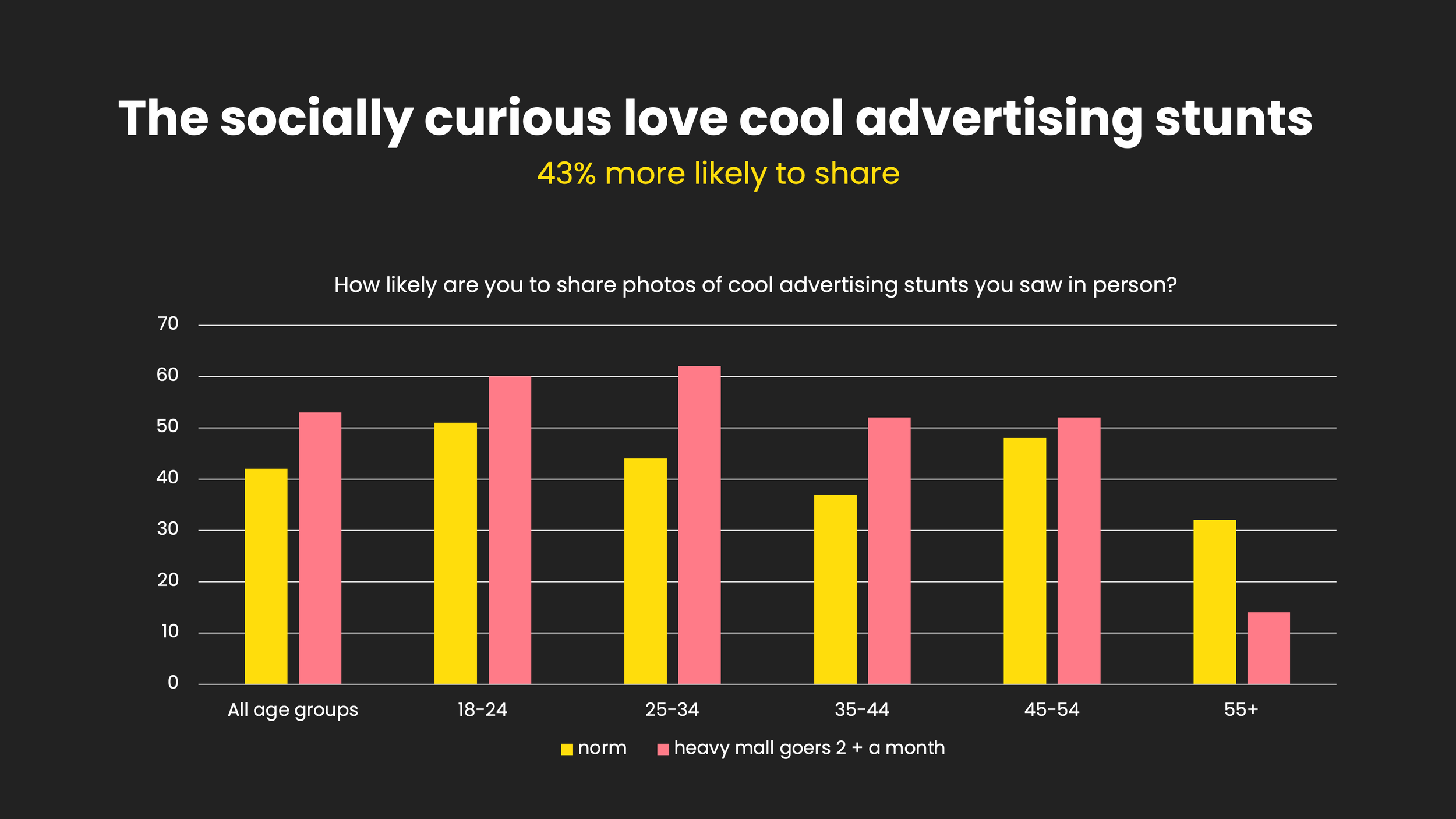
Importantly, mallgoers are not a single audience but comprise three distinct cinema decision-making mindsets. The first group, the Socially Curious, is typically aged 18–24 and driven by excitement, originality and word of mouth. For them, recommendations from others are the single biggest influence and they are more likely to respond to unique concepts and culturally relevant buzz.
The second group, the Engaged with Story audience, is generally older and motivated by emotional connection. Compelling narratives are particularly important drivers, while reviews and must-see marketing help validate viewing choices. Full-motion trailers and storytelling-led creative are especially effective in reaching this segment.
The third group, the Discerning audience, is most commonly found among 35–44-year-olds. Often balancing busy family lives, they seek reassurance before committing their time. Cast strength, nostalgia and trusted reviews carry significant influence, making stature, credibility and visibility key components of effective communication.
Taken together, the research presents a compelling commercial case for mall advertising. Mallgoers attend cinemas more frequently, are more likely to drive opening weekend success, generate multiple-ticket group visits and amplify film awareness through social sharing and word of mouth. Their influence extends well beyond the shopping centre itself, shaping conversations, recommendations and viewing decisions among wider networks of family and friends.
Ultimately, mall advertising does not simply reach cinema audiences - it activates them. By connecting with highly engaged, socially influential and behaviourally valuable moviegoers at moments of leisure and planning, mall media has the power to drive both attendance and advocacy, making it a uniquely effective channel for theatrical film marketing.
Want to discuss this further? Please feel free to get in touch if you would like to talk to us about opportunities relating to anything mentioned above or any other queries.