
Malls and the FIFA World Cup 2026
It’s coming (Out-Of-) Home

The 2026 FIFA World Cup is expected to become one of the biggest media moments of the decade. Expanded to 48 teams and hosted across the US, Canada and Mexico, the tournament will stretch across more matches, more viewing hours and more consumer interaction than ever before.
But while the football itself will happen thousands of miles away, the audience behaviour surrounding it will play out much closer to home.
We’ve recently looked into how our audiences in shopping centres are expecting to engage with the tournament and what this means for the space as a media planning touchpoint.
Mallgoers Are Already Engaged
Our recent audience research reveals that mallgoers are not simply casual participants in the World Cup conversation. They represent one of the tournament’s most engaged consumer groups.
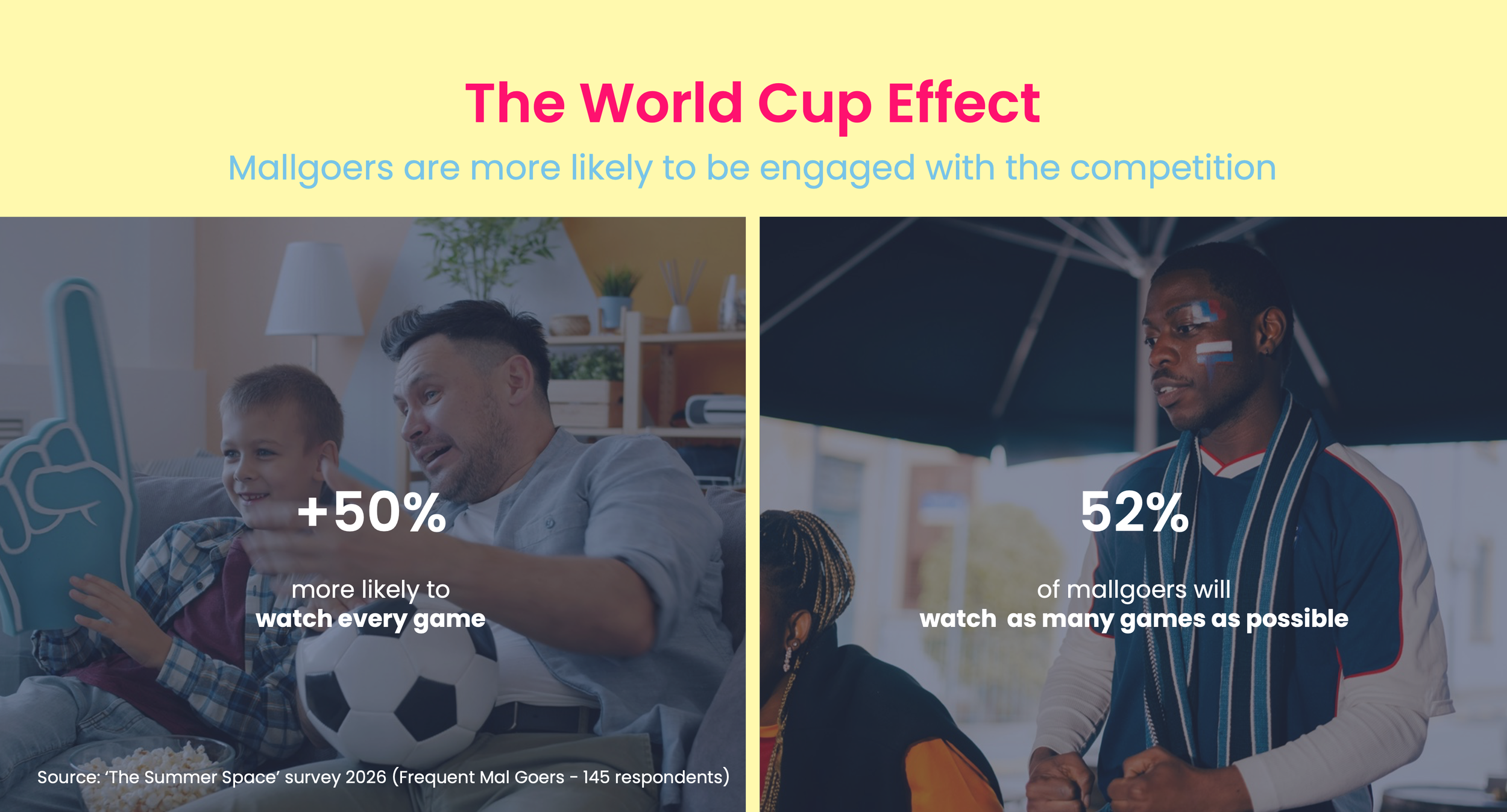
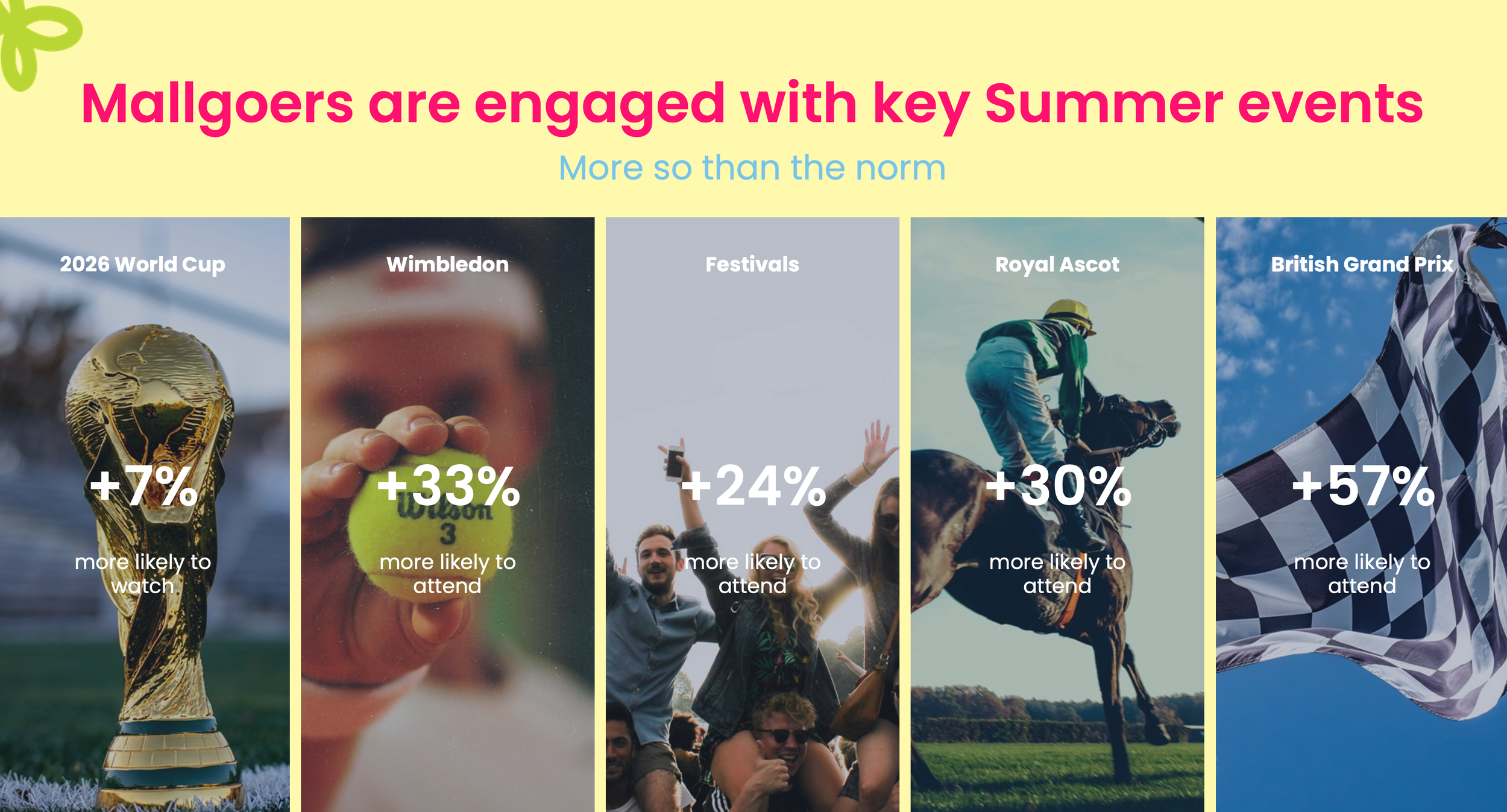
In fact, we found that they are 7% more likely than the average consumer to watch the 2026 World Cup, while they are 50% more likely to watch every game of the tournament. More than half (52%) say they intend to watch as many matches as possible.
This points to an audience deeply invested in the event itself - not just the headline fixtures or England games, but the wider tournament narrative that builds over several weeks.
The World Cup Is More Than a Viewing Event
Major tournaments have increasingly become cultural moments that extend far beyond the 90 minutes on screen. We know that national tournaments like The World Cup drive uplifts in social activity, retail spending, gatherings and shared experiences that shape consumer behaviour for weeks at a time. Mall audiences sit directly within that ecosystem.
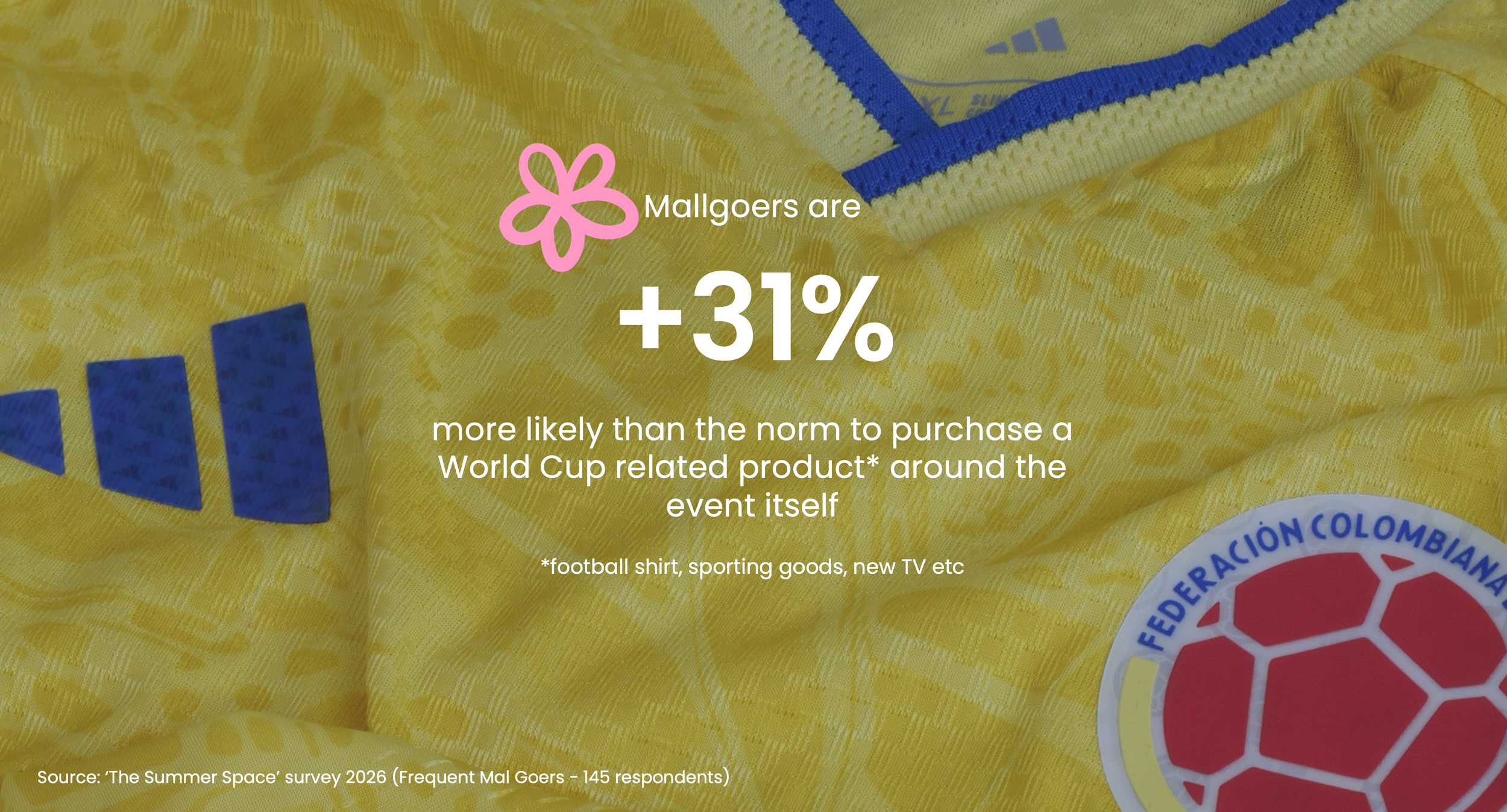
Research shows that mallgoers are 31% more likely than average to purchase World Cup-related products during the tournament period, whether that’s football shirts, sporting goods, upgraded televisions or products linked to hosting and viewing experiences.
The relationship between shopping centres and live sport is however not just transactional - it’s also more behavioural. Consumers don’t simply visit malls to buy products; they use them as part of the wider rhythm surrounding major events.
That becomes even clearer when looking at how consumers themselves describe the role shopping centres play during tournaments.
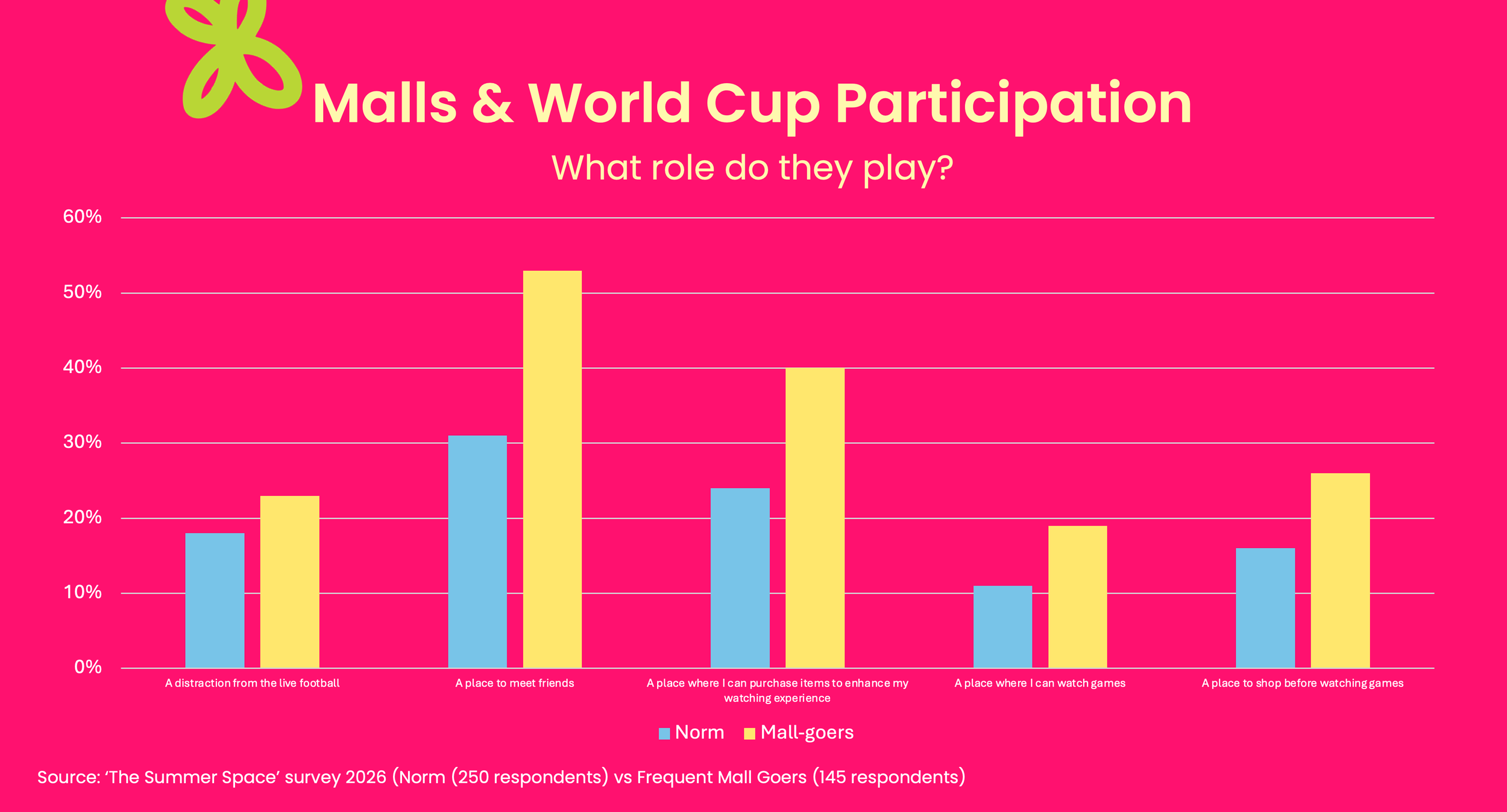
Whilst four in ten say malls are somewhere they can purchase items that enhance their viewing experience, more than half of mallgoers (53%) see shopping centres as a place to meet friends around the World Cup period and 26% will visit before watching games.
Even among audiences focused on football, shopping centres remain woven into the occasion itself. Nearly one in five consumers say malls are somewhere they can watch matches, while others view them as a welcome distraction from the live football coverage.
This highlights how shopping centres increasingly operate directly alongside tournament culture, rather than existing outside of it – offering social spaces and an environment that supports preparation and engagement during major sporting moments.
Our recent research shows how mall-goers are expecting to engage with the tournament.
Why 2026 Could Feel Different
The structure of the 2026 tournament may amplify those behaviours even further.
With the World Cup hosted primarily in North America, UK viewing schedules are expected to shift later into the day. Many matches are likely to kick off between 5pm and 10pm BST, with some fixtures extending beyond midnight. That changes the flow of how audiences experience the tournament.
Unlike traditional summer World Cups where matches often dominate afternoons, including second screen viewing during workdays, the 2026 competition is likely to merge more naturally into after-work routines, evening socialising and late-night leisure activity. The hours before kick-off may become just as culturally important as the matches themselves.
For shopping centres, this creates a natural overlap with audiences already spending time in retail and leisure environments during these evening periods.
Currently, 19% of our mall screen impacts already occur after 6pm, with evening footfall growing 26% year-on-year – a trend we’re identifying as The Rise of The Night-Time Economy (NTE). Between Thursday and Saturday, one in five visits take place between 6pm and 11pm - rising to 22% on Fridays.
This shift is being driven by the continued evolution of shopping centres from purely retail destinations into broader social and leisure environments. Across the UK, landlords and retail groups are investing heavily in dining, entertainment and experience-led offers designed to increase dwell time and encourage later visits, while many centres are also extending trading hours to better align with after-work audiences and evening social behaviour.
These are already highly social, high-dwell periods for shopping centres. The World Cup simply intensifies existing patterns of collective anticipation and engagement within consumer behaviour.
Lessons From Qatar
There are strong parallels between the upcoming tournament and the 2022 World Cup in Qatar.
Qatar disrupted traditional expectations around the competition. It was the first winter World Cup in history, landing directly in the middle of the UK retail calendar and against the backdrop of post-pandemic recovery.
At the time, there were questions around whether audiences would engage with a tournament staged outside its normal summer window. Instead, the competition still generated enormous attention and became a significant moment for media channels tied to public movement and shared experiences.
Out of Home advertising saw particularly strong momentum during this period. UK OOH revenues grew by 31.1% across 2022 as mobility patterns recovered following COVID disruption and advertisers returned to high-footfall environments.
The context mattered. Consumers were returning to shops, restaurants, entertainment venues and city centres in large numbers after years of restrictions. At the same time, the World Cup created an additional layer of national attention, routine viewing and retail activity.
Looking Ahead
The 2026 tournament arrives under very different circumstances, but there are notable similarities. Once again, the competition sits outside the viewing patterns audiences traditionally associate with the World Cup. Once again, it will reshape how consumers move through towns and cities during the tournament window. But unlike 2022, these evening and leisure behaviours are now far more established.
The tournament is expected to generate record global audiences and unprecedented commercial attention, with WARC forecasting the tournament will contribute more than £7 billion to the global advertising market.
But the opportunity surrounding the tournament may not solely belong to broadcasters or streaming platforms.
The World Cup increasingly extends beyond the live broadcast itself - shaping routines, social behaviour and consumer movement throughout the day. For brands, the opportunity is no longer confined to the match window alone, but to the environments where anticipation builds, conversations happen and audiences gather collectively in the hours around the event.
Shopping centres occupy a unique position within that landscape. They combine scale with high-footfall, socially driven spaces where commerce, leisure and cultural moments increasingly intersect.
In 2026, while the tournament may be hosted in North America, many of the behaviours and shared experiences surrounding it will play out much closer to (Out-Of-) home.
Want to discuss this further? Please feel free to get in touch if you would like to talk to us about opportunities relating to anything mentioned above or any other queries.