
Levelling Up: How Malls Power Gaming Brand Engagement
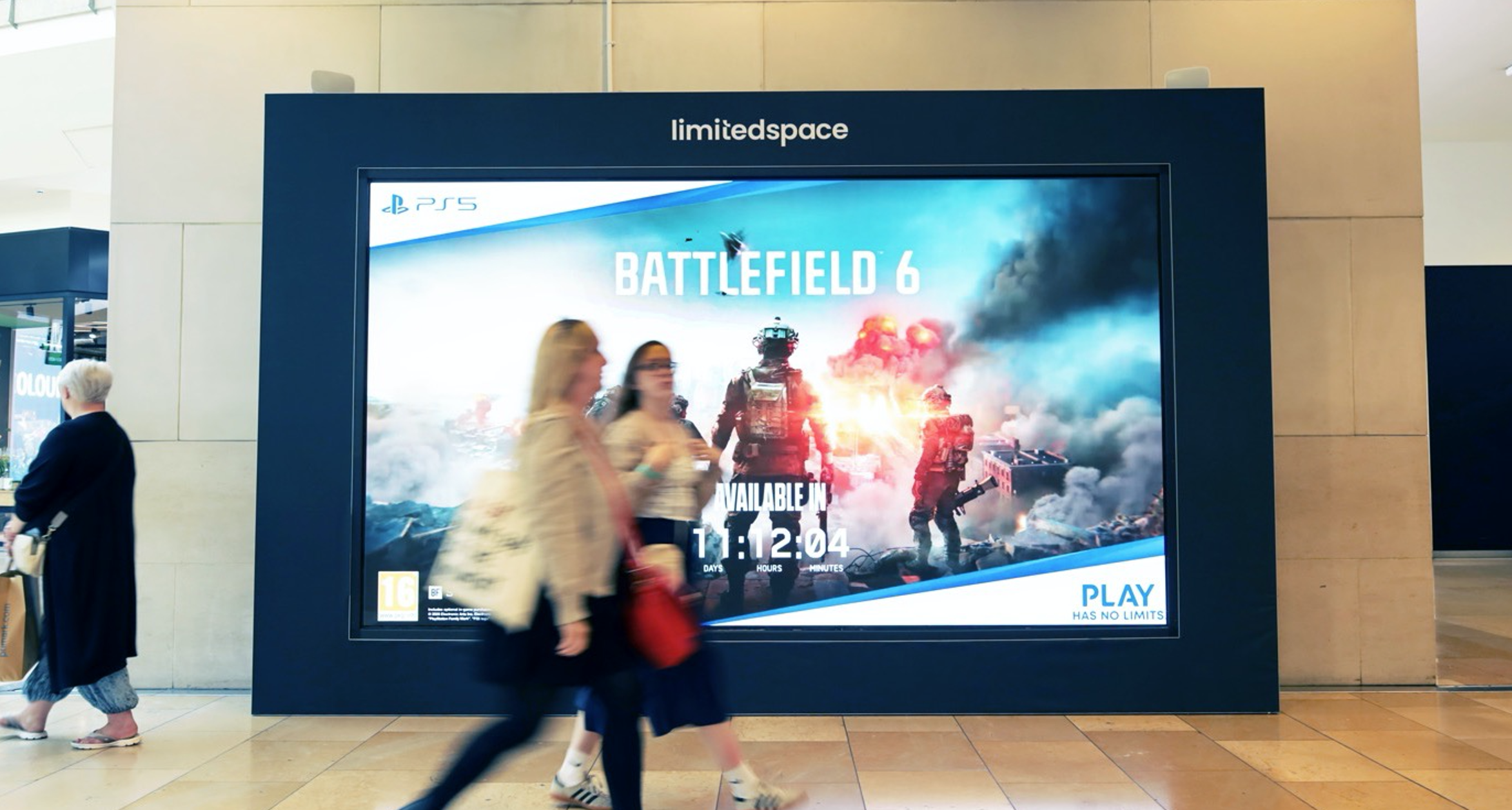
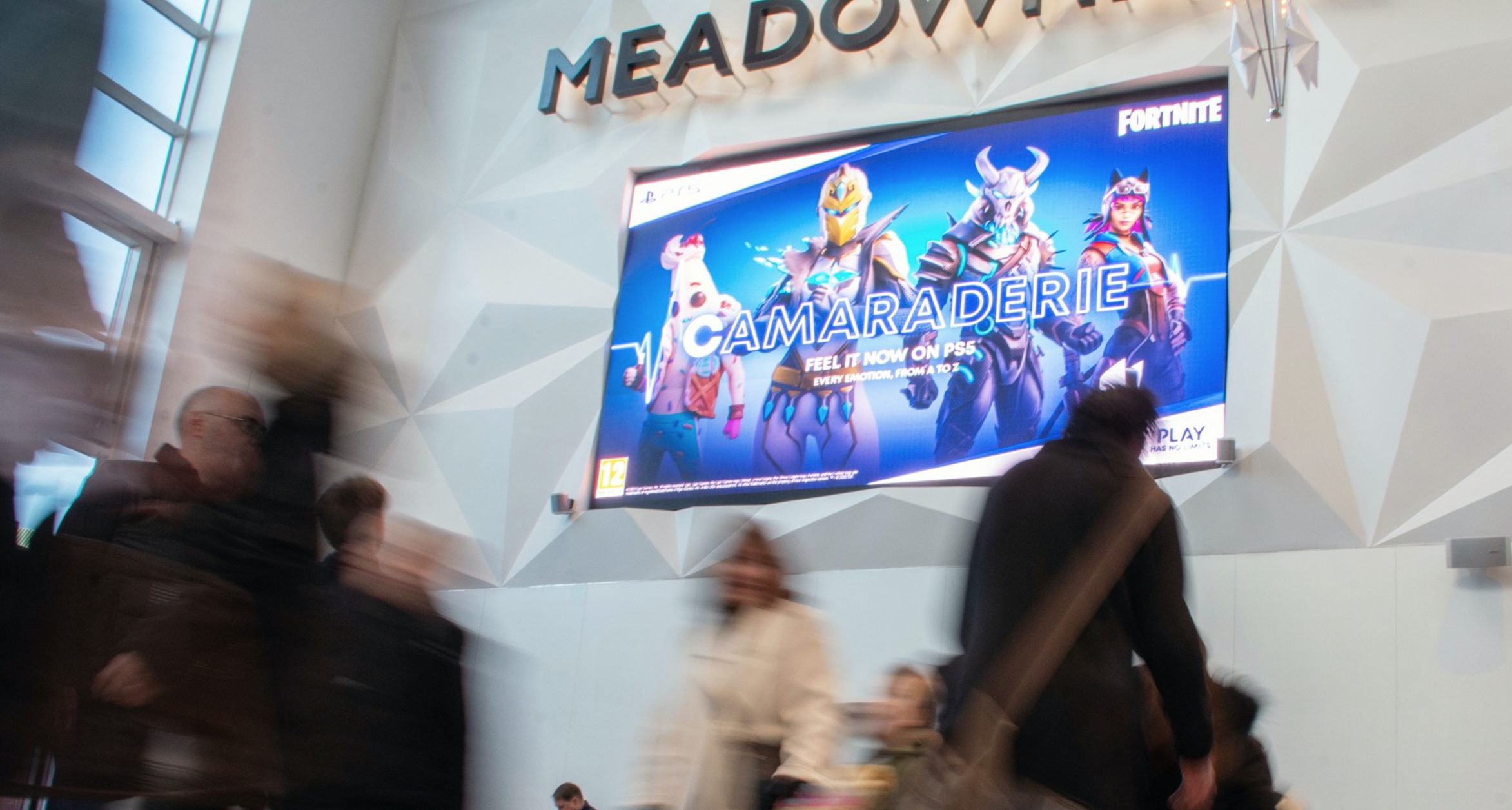
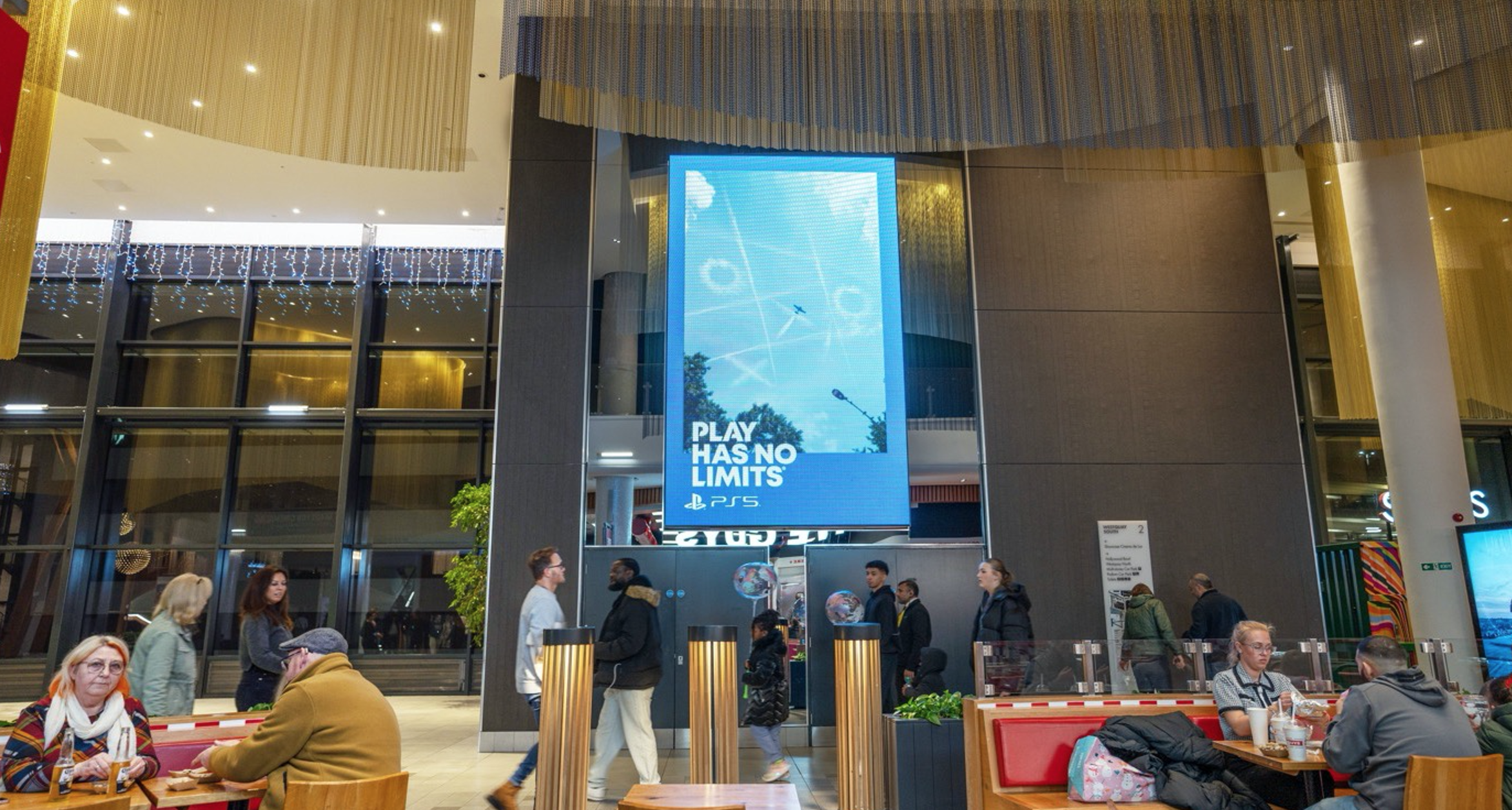
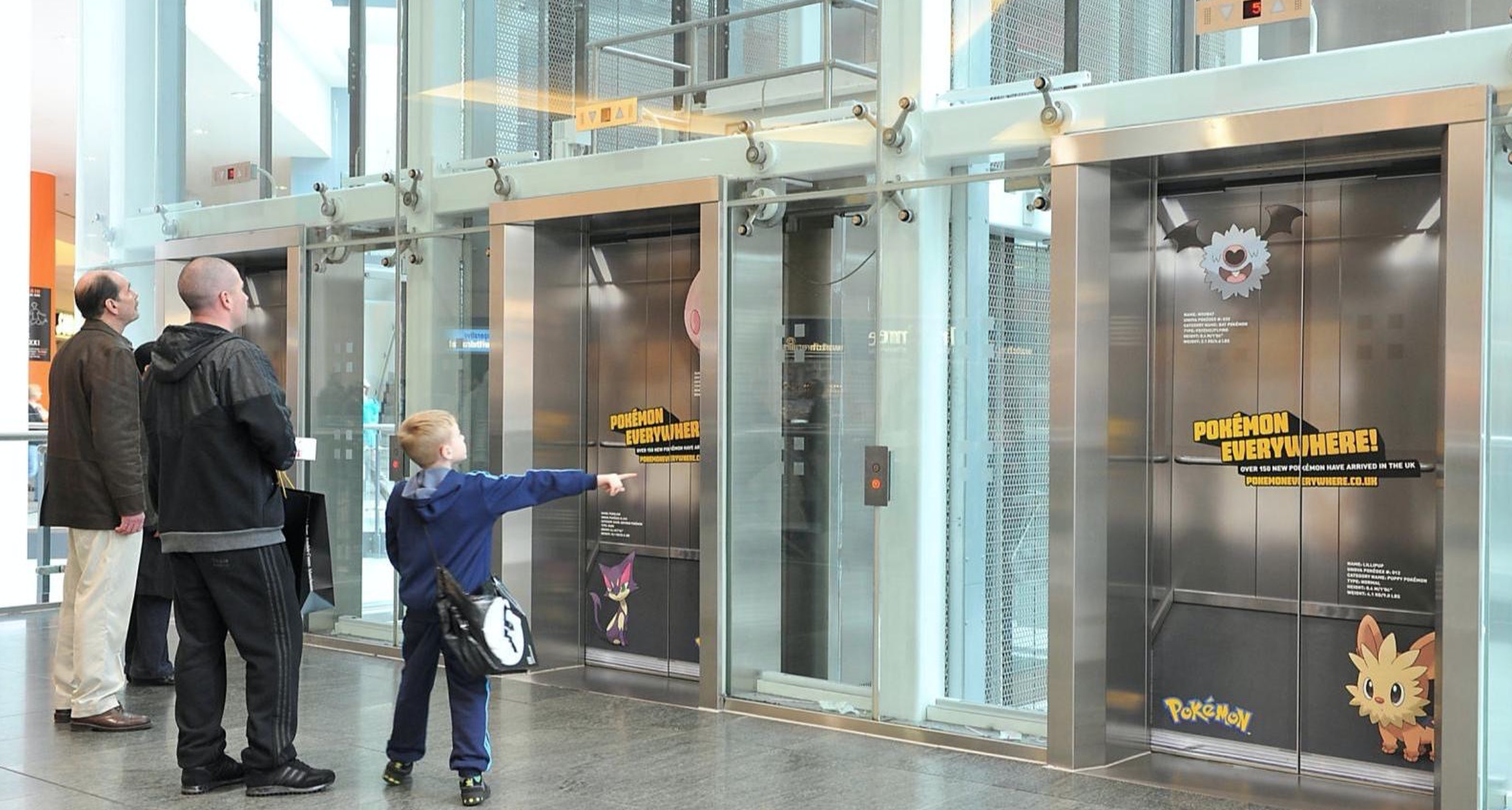
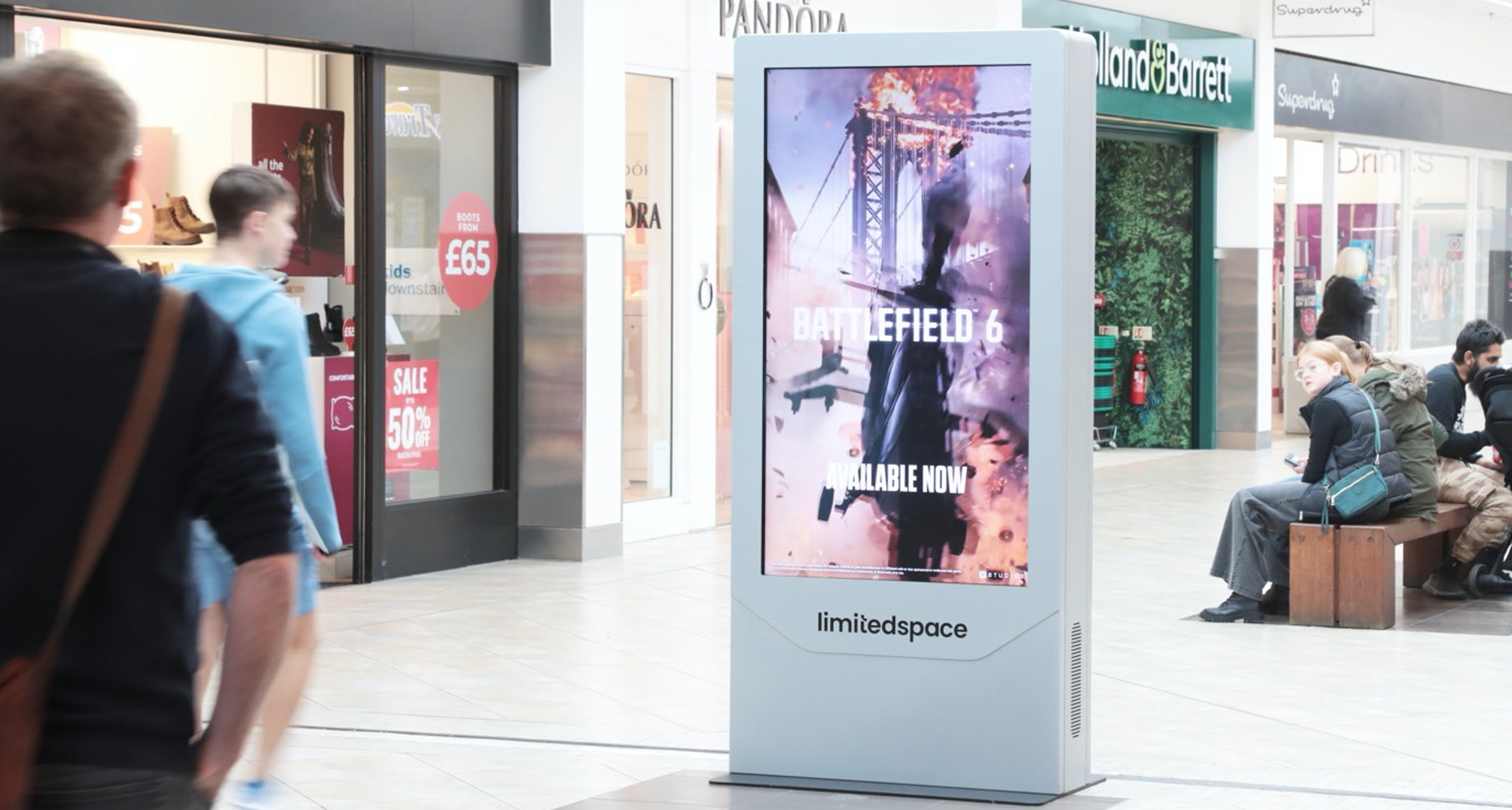

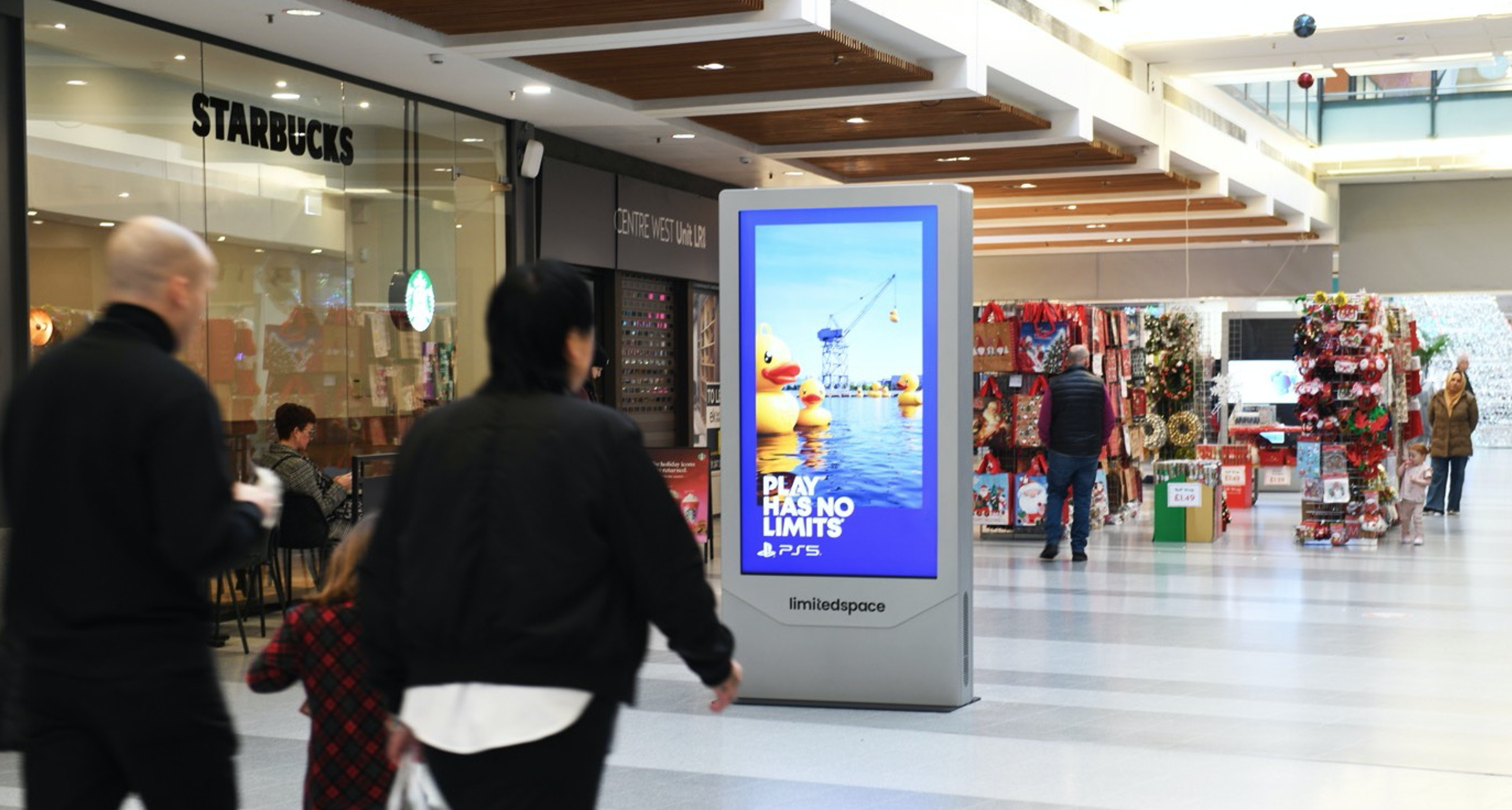
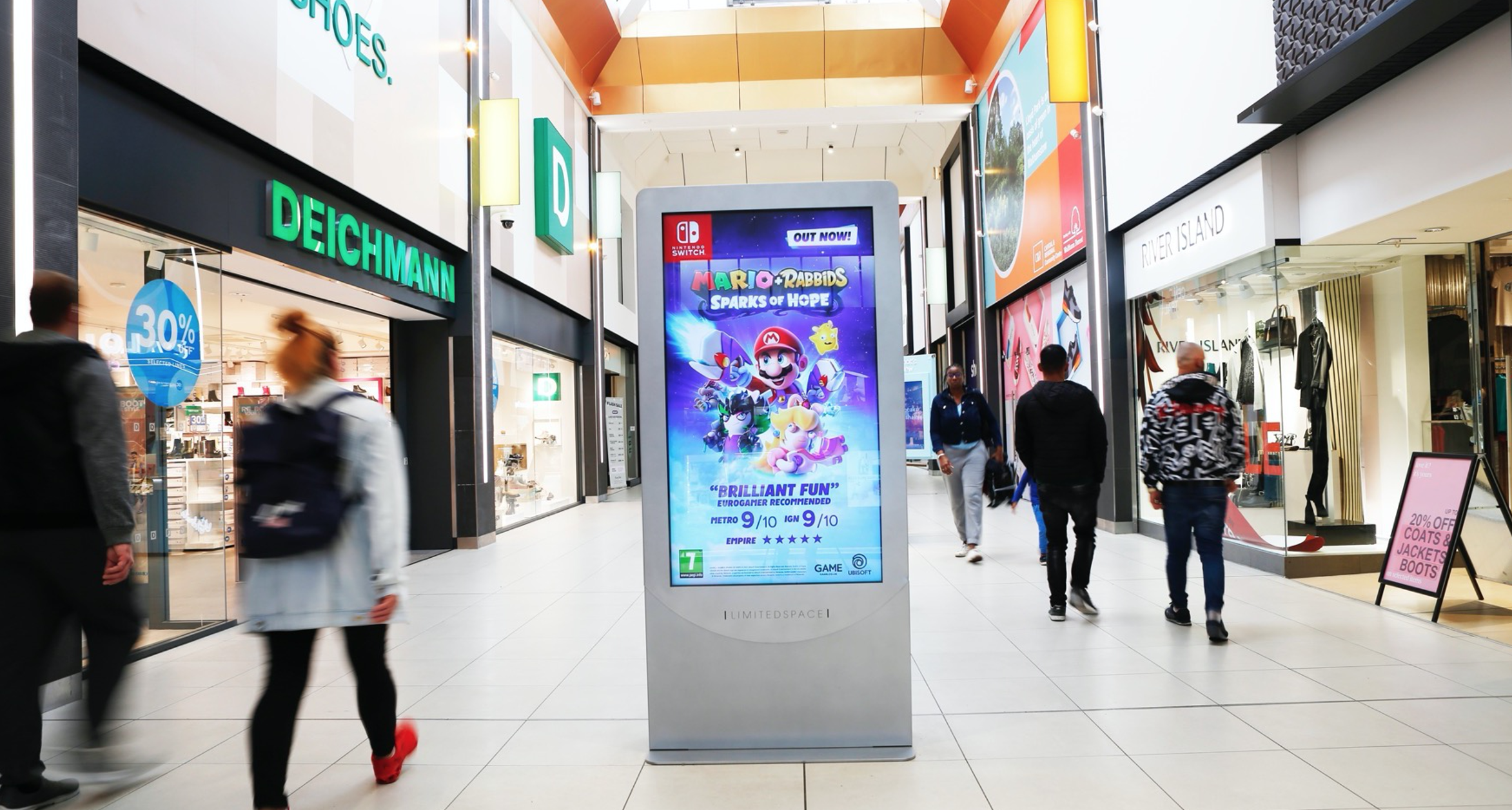
For gaming brands competing in an increasingly saturated digital marketplace, physical environments offer a rare and valuable advantage: sustained attention. Shopping centres deliver not only scale, but quality - affluent, engaged audiences with time to spend and an open mindset pre-coded for discovery. When national retail data is combined with our proprietary gaming insights, the strategic case for mall-based gaming campaigns becomes particularly compelling.
Shopping centres remain one of the few environments where audiences slow down. Millions of weekly visits translate not only into scale, but into 95 minutes of average dwell time - an extended window for brands to build familiarity and momentum. Within these spaces, discovery is part of the experience. Visitors arrive open to exploration, making them more receptive to new releases, franchise extensions and entertainment propositions. Crucially, 65% of this audience falls within the ABC1 demographic, meaning that sustained attention is concentrated among higher-spending households. In contrast to the rapid scroll of digital media, shopping centres offer an environment where attention can compound over the course of a visit. This makes malls not just high-traffic environments, but commercially valuable ones.
In the wider context of the UK entertainment economy, the commercial scale of gaming continues to expand. Consumer spending on video games reached £5.4 billion in 2025, marking the strongest growth since 2020 across console, PC and mobile formats (PocketGamer). This level of investment reinforces gaming’s position as a mainstream entertainment category and underlines the value of reaching high-intent audiences in physical environments where entertainment decisions are actively being shaped.
Malls are entertainment hubs
But modern shopping centres are no longer purely retail destinations; they are mixed-use entertainment ecosystems. Gaming brands naturally sit alongside retailers such as GAME and experiential stores from The LEGO Group, as well as all the top cinema operators. This proximity is more than contextual - it is culturally reinforcing. Being positioned within a space already associated with film franchises, collectibles and shared entertainment experiences strengthens gaming’s legitimacy and elevates impact amongst a growing audience affiliated with associated IPs.
Increasingly, this ecosystem extends beyond adjacency and into participation. Major retail groups are beginning to integrate esports arenas and console or PC gaming stations directly into flagship stores, transforming parts of the shopping centre into live gaming environments. By embedding competitive play spaces within physical retail, brands are responding to the shift in gaming from product purchase to social, community-driven experience. For shopping centres, these installations drive incremental dwell time and repeat visitation; for gaming brands, they create an immediate bridge between media exposure and hands-on interaction. A consumer can see a campaign, try a title and engage with fellow players within the same venue. As esports continues to scale in mainstream popularity, this convergence of retail, entertainment and competitive play further strengthens malls as culturally aligned, experience-led environments.
Understanding the Mall Gaming Audience
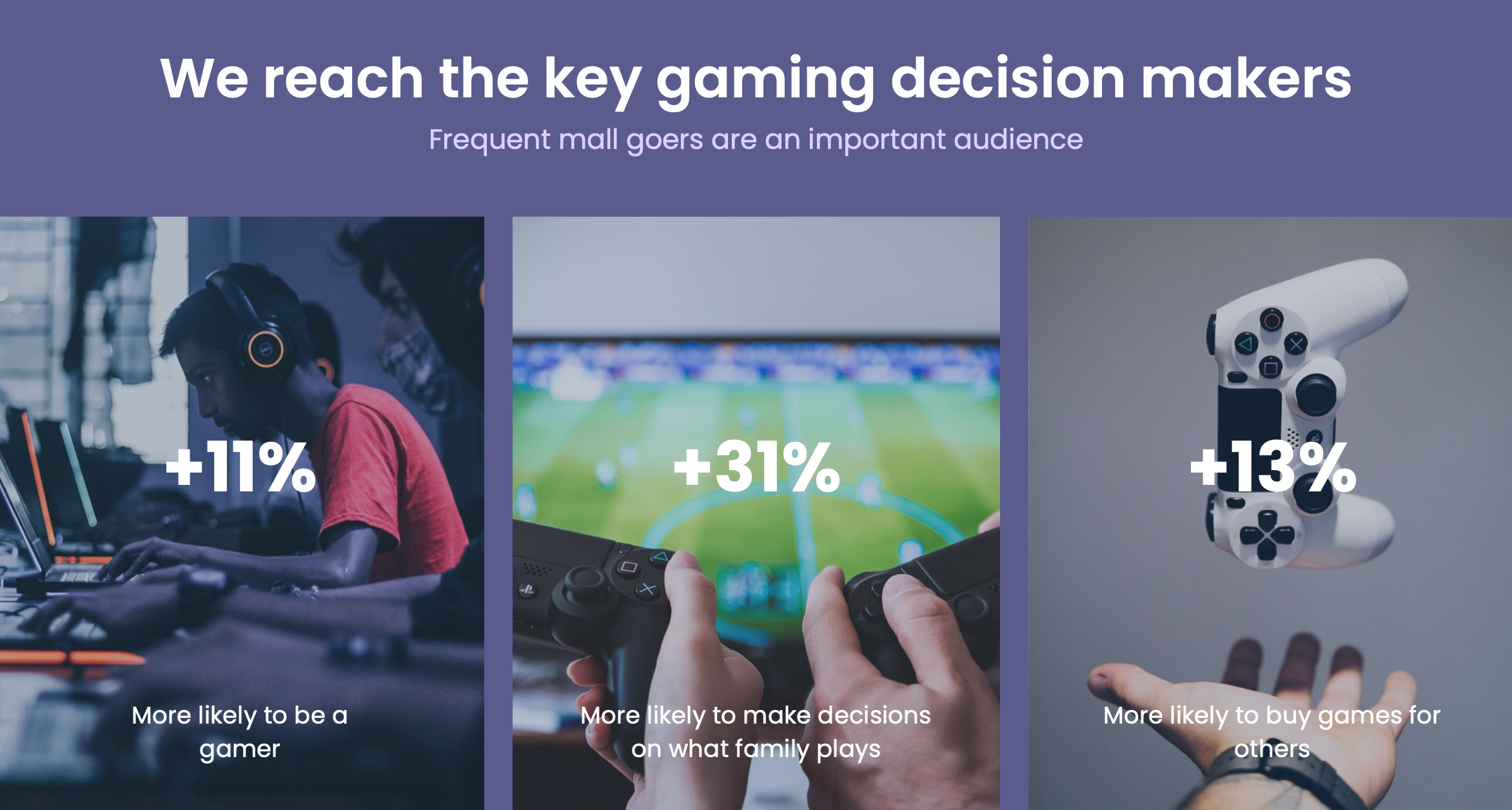
Crucially, mall audiences do not simply represent general consumers - they over-index for gaming participation and influence. Our research shows that visitors to shopping centres are 11% more likely than the national average to be gamers. Even more significantly, they are 31% more likely to make decisions about what the family plays and 13% more likely to purchase games for others. This positions malls as a critical touchpoint for reaching household entertainment decision-makers, particularly parents and gift buyers. With the UK games market generating billions annually, influencing those decision-makers at scale has clear commercial value.
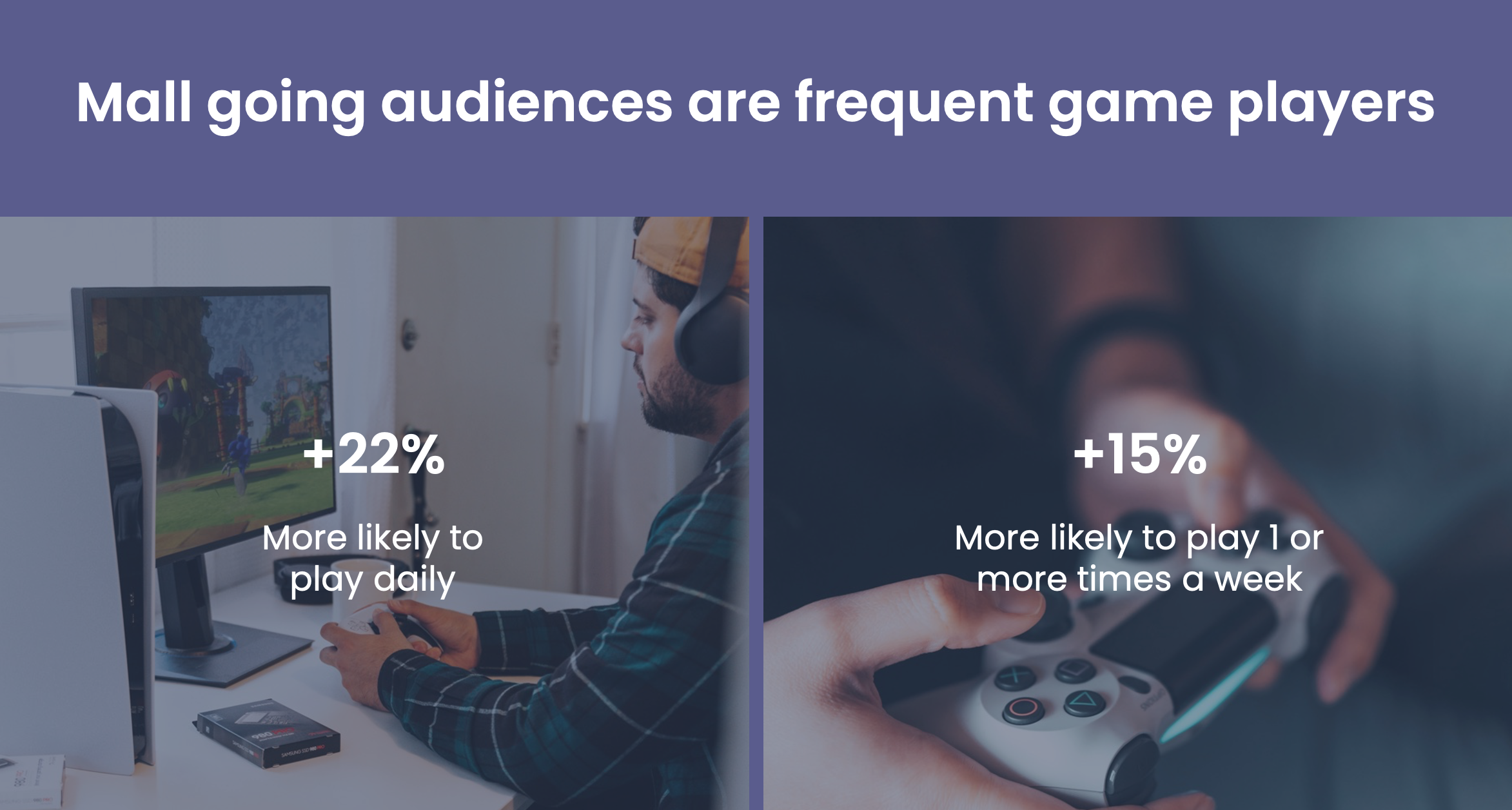
The behavioural profile of mall audiences further strengthens the argument. These are not passive or occasional players. They are 22% more likely than average to play daily and 15% more likely to play at least once a week. This level of habitual engagement makes them especially responsive to launch messaging, pre-order campaigns, live-service updates and subscription propositions. Rather than attempting to create new demand, mall advertising reinforces existing gaming behaviours among an already active audience.
Platform engagement is equally broad. Mall visitors over-index across all major gaming platforms, being 14% more likely than average to play on PlayStation, 12% more likely to play on Xbox, 19% more likely to play on PC and 6% more likely to play mobile games. This multi-platform behaviour offers gaming brands flexibility in campaign objectives. Whether supporting a console-exclusive launch, a PC-first strategy, a cross-platform ecosystem or a mobile growth push, shopping centres provide access to a diversified gaming audience within a single physical environment.
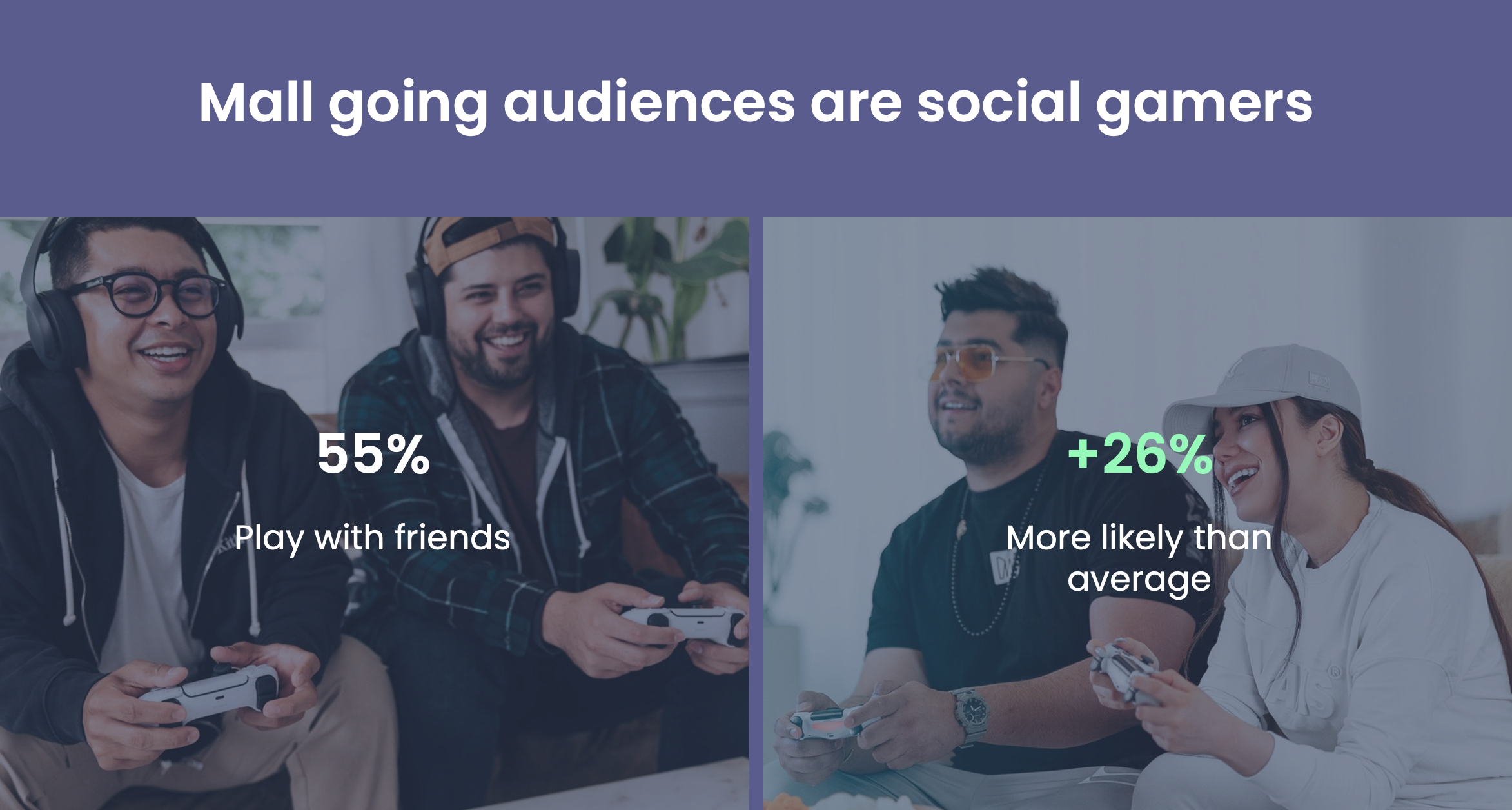
Social behaviour also aligns strongly with the mall setting. More than half of mall-going gamers - 55% - play with friends, making them 26% more likely than average to be social gamers. Shopping centres are inherently communal spaces where families and friendship groups spend time together. This creates a natural synergy between the environment and the way modern audiences experience games. Advertising in a social setting increases the likelihood of shared discussion, collective purchase decisions and word-of-mouth amplification, particularly around major releases.
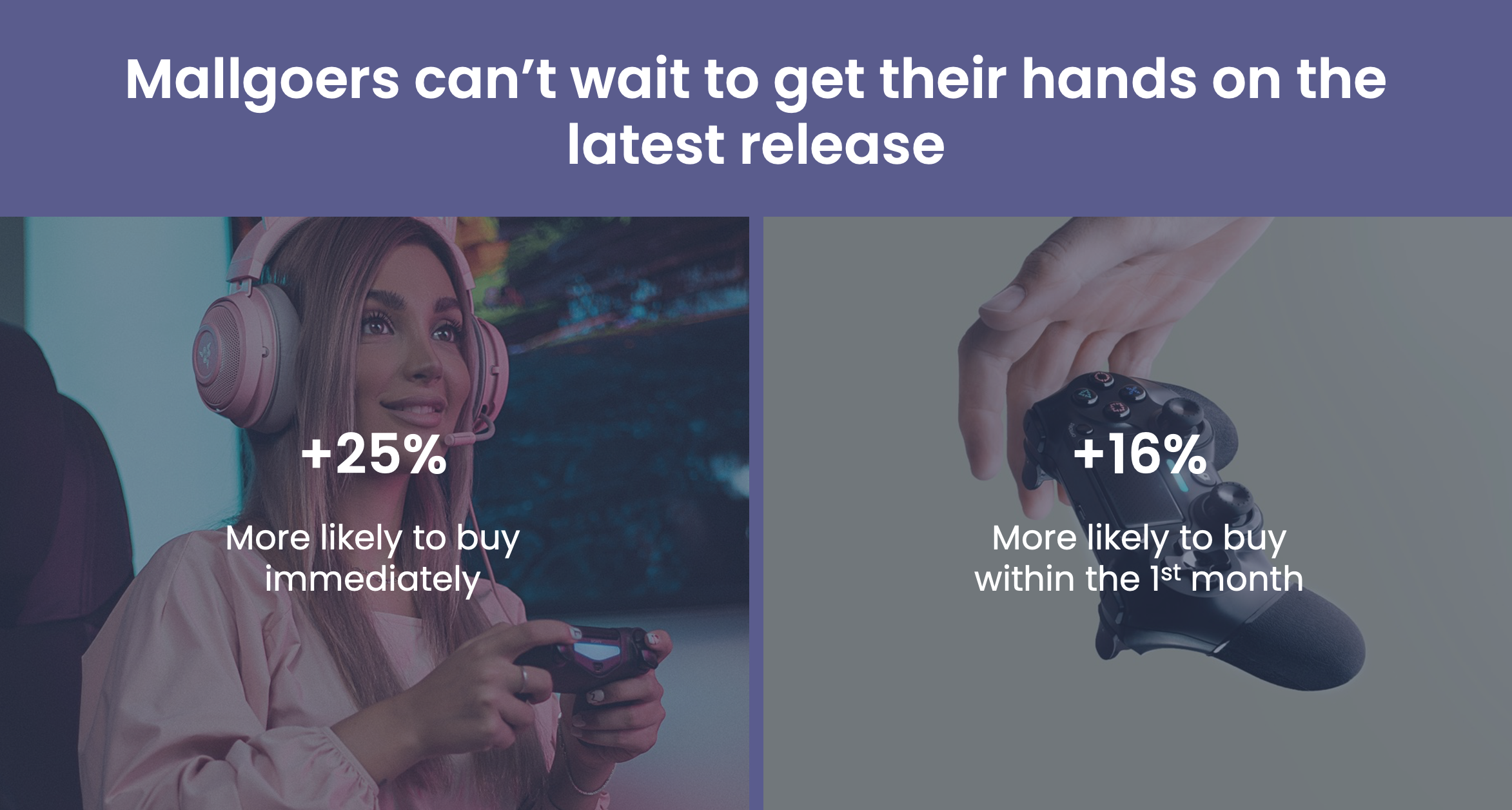
Perhaps most compelling is the demonstrated purchase intent. Mall audiences are 25% more likely than average to buy games immediately upon release and 16% more likely to purchase within the first month. They are also 25% more likely to buy five or more games per year, indicating higher annual value and franchise loyalty. In an environment where physical retail, click-and-collect services and digital wallet purchasing coexist, the path from awareness to transaction can be significantly shortened.
In an era where digital advertising faces fragmentation, rising costs and attention scarcity, UK shopping centres offer a complementary channel defined by scale, affluence, dwell time and contextual relevance. They provide brand-safe, high-impact environments where gaming audiences are not only present, but over-indexing across participation, influence and spending.
Want to discuss this further? Please feel free to get in touch if you would like to talk to us about opportunities relating to anything mentioned above or any other queries.